Pig Carcass Horizontal Skinning Machine | HT-P303
Pig Carcass Horizontal Skinning Machine. Compare input range, required output and working interfaces; share your requirements for configuration review.
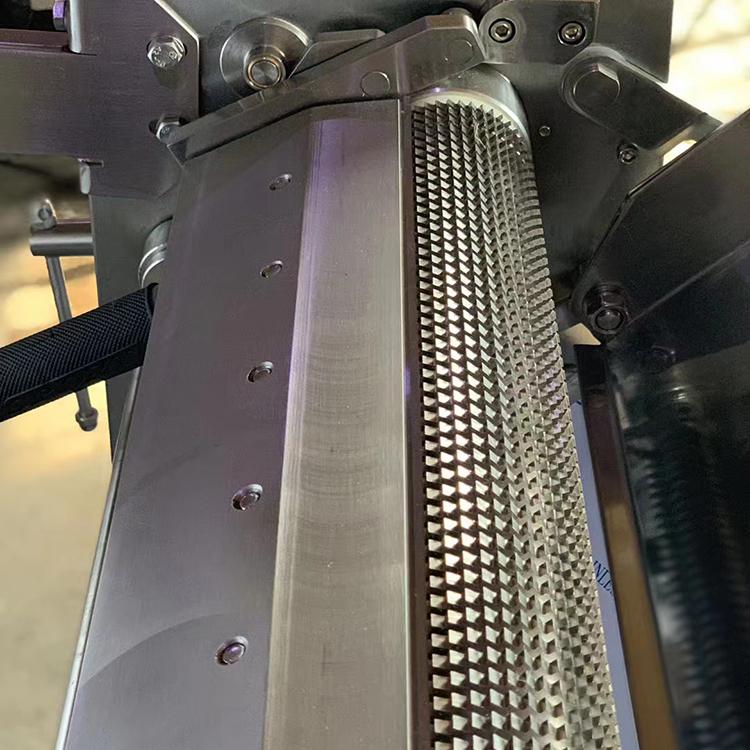
Specification notes
| Model | HT-P303 |
|---|---|
| Rated voltage / phase / frequency | 380v / 3p / 50hz |
| Power | 4+1.5kw |
| Out size | 3400*1150*1100mm(L*W*H) |
| Max capacity | 100 Heads per hour |
| Component and material | 1)Painted iron or stainless steel support frame 2)Cast iron roller 3)High strength steel vibration knife |
| Data status | Source reference R1; configuration requires written confirmation |
Use and process role
The Pig Carcass Horizontal Skinning Machine is designed as a machine or conveyor section that supports hide opening or controlled removal of skin from pig carcasses. It should be treated as part of the process flow, not as a stand-alone catalogue item. The HT listing supplies reference data for the offered arrangement; those figures are reproduced below for comparison. For export quotations, confirm voltage, materials, guarding, spare parts and documentation before the purchase order is released.
Structure and working principle
The carcass is restrained while an operator or powered roller establishes the skin opening and pulls the skin away under controlled tension. The handling section maintains carcass orientation and keeps the removed skin clear of exposed meat. During commissioning, the sequence should be tested first without product and then under a representative load.
Source-listed construction and features
Controlled tension to limit meat damage
Stable carcass restraint
Clear separation of skin and meat paths
Adjustment for carcass size
Guarded rollers or pull points
Wash-down access
Applications and integration
The usual application is pig plants using a skin-off process or requiring a dedicated skin-opening station. It can be specified for a new line or adapted to a retrofit, provided that the existing supports, working heights, utilities and control signals are measured on site. Plants handling several pig sizes should state the full range rather than quoting only an average.
Selection conditions and project fit
State incoming product size and temperature, target cut or separation, rate, output specification, interfaces, blade or tool arrangement and guarding requirements. Agree a representative-product trial and the acceptance criteria.
Evidence, configuration and document status
The descriptions and tables below are source-listed reference information, not independently measured results. Confirm material grade, electrical supply, dimensions, duty, guards, controls and delivery scope in the approved quotation and drawing. No model-specific certificate or verified customer installation is established by this page. Request the document issuer, applicable model, scope and revision before relying on a compliance claim.
Source and version
Reference compilation R1, 2026-11-16. Supplied document: 2. 烫脱毛,剥皮,掏脏设备.doc; section 2.21. Configuration rows retain source units. Where the source lists alternatives or several models, each row must be checked as a separate configuration; a capacity or dimension must not be transferred between models.
Installation and process interfaces
Provide product size and condition, target cut or separation, feed/discharge direction, support height and space for tool replacement and maintenance. Confirm the proposed guards, operator access and connection to the receiving station.
Utilities, control and feedback requirements
Check the model-specific drive and electrical or fluid-power supply. Agree start/stop, upstream/downstream interlocks and feedback requirements where relevant. Do not infer a control protocol or tool capability from a family photograph.
Maintenance and part identification
Request the configuration-specific manual and part references for matched blades or tools, drive components, seals and position sensors where fitted. Agree quantities and replenishment needs against actual duty and delivery experience. This page does not prescribe maintenance intervals, repairs or a guaranteed stock position.
Configuration-specific document checklist
Before purchase, identify the complete model and suffix, configuration table and drawing revision. Request the applicable layout/interface drawing, specification, manual, parts list and agreed inspection or test records. Performance curves or certificates should be linked only when an applicable original exists; a reference summary is not a substitute.
Compare configurations for your project
For Pig Carcass Horizontal Skinning Machine | HT-P303, keep the complete identifier HT-P303 attached to its own source configuration. Compare process duty, incoming animal or product range, target output, utilities, installation envelope and upstream/downstream interfaces under the same project conditions. A higher catalogue rate alone does not establish a better fit.
Start with this page's listed reference fields: Rated voltage / phase / frequency: 380v / 3p / 50hz; Power: 4+1.5kw; Out size: 3400*1150*1100mm(L*W*H); Max capacity: 100 Heads per hour; Component and material: 1)Painted iron or stainless steel support frame 2)Cast iron roller 3)High strength steel vibration knife. Confirm units, conditions and revision against the quoted configuration; do not transfer values to another model.
Compare alternative quotations only after each supplier identifies the complete model, configuration and matching documents. No universal suffix meaning or unsupported advantage over another model is asserted.
Purchasing review and enquiry preparation
Start with Pig Carcass Horizontal Skinning Machine | HT-P303 and its specification/source notes. Download the linked reference summary, then request the original configuration-specific drawing and current technical documents. The summary is not an approved drawing, certificate or acceptance record.
Use the linked pig processing application and purchasing guidance to review process interfaces, selection conditions and the proposed supply boundary. Verify which manufacturer, supplier and installation responsibilities are included; a reference photo does not establish factory ownership, certification or a completed HUATAO installation.
Before enquiry, prepare animal species or incoming product, size/weight range, target throughput, operating shifts, destination, available utilities and a layout or interface drawing. Quote HT-P303 and identify the missing documents or conditions you need checked. Use the enquiry on this page so the product and original source page are retained.
| Parameter | Reference Value / Buyer Check |
|---|---|
| Model | HT-P303 |
| Application | Which main used to remove pig skin complete from carcass with intact |
| Rated voltage / phase / frequency | 380v / 3p / 50hz |
| Power | 4+1.5kw |
| Feed amount | ±12mm |
| Roller diameter | Φ650mm |
| Out size | 3400*1150*1100mm(L*W*H) |
| Max capacity | 100 Heads per hour |
| Component and material | 1)Painted iron or stainless steel support frame 2)Cast iron roller 3)High strength steel vibration knife |
| Quotation control | Confirm whether the duty is skin opening or full skin removal, carcass range, throughput, rail height, pull direction, operator position and skin discharge route. |
Buyer FAQ
What information is needed to quote the Pig Carcass Horizontal Skinning Machine?
Confirm whether the duty is skin opening or full skin removal, carcass range, throughput, rail height, pull direction, operator position and skin discharge route.
Which spare parts should be ordered with the machine?
Start with the normal wear and hygiene parts for this duty: bearings, seals, sensors, chains or belts, nozzles, blades, scrapers, pneumatic parts and electrical protection devices as applicable. The supplier should issue a model-specific list.
Are the published technical figures final?
No. The table records reference information from the citedHTpage. Capacity, power, dimensions, material grade and utilities must be confirmed on the quotation and approved drawing.
How should the equipment be accepted after installation?
Use a documented site-acceptance test covering alignment, guards, emergency stops, interlocks, dry running, representative load, cleaning access, leakage or drainage, operator training and delivery of manuals and spares.
What information is needed to select this equipment?
State incoming product size and temperature, target cut or separation, rate, output specification, interfaces, blade or tool arrangement and guarding requirements. Agree a representative-product trial and the acceptance criteria.
Are these specifications an approved supply commitment?
No. These are source reference details. The quotation must identify the exact configuration, drawing revision, included documents and agreed acceptance criteria.
Related configurations and guidance
Reference specification and document status
Download HT-P303 reference specification and verification checklist
This reference is not an approved manufacturing drawing, inspection report or certificate. Request the configuration-specific documents before purchase.