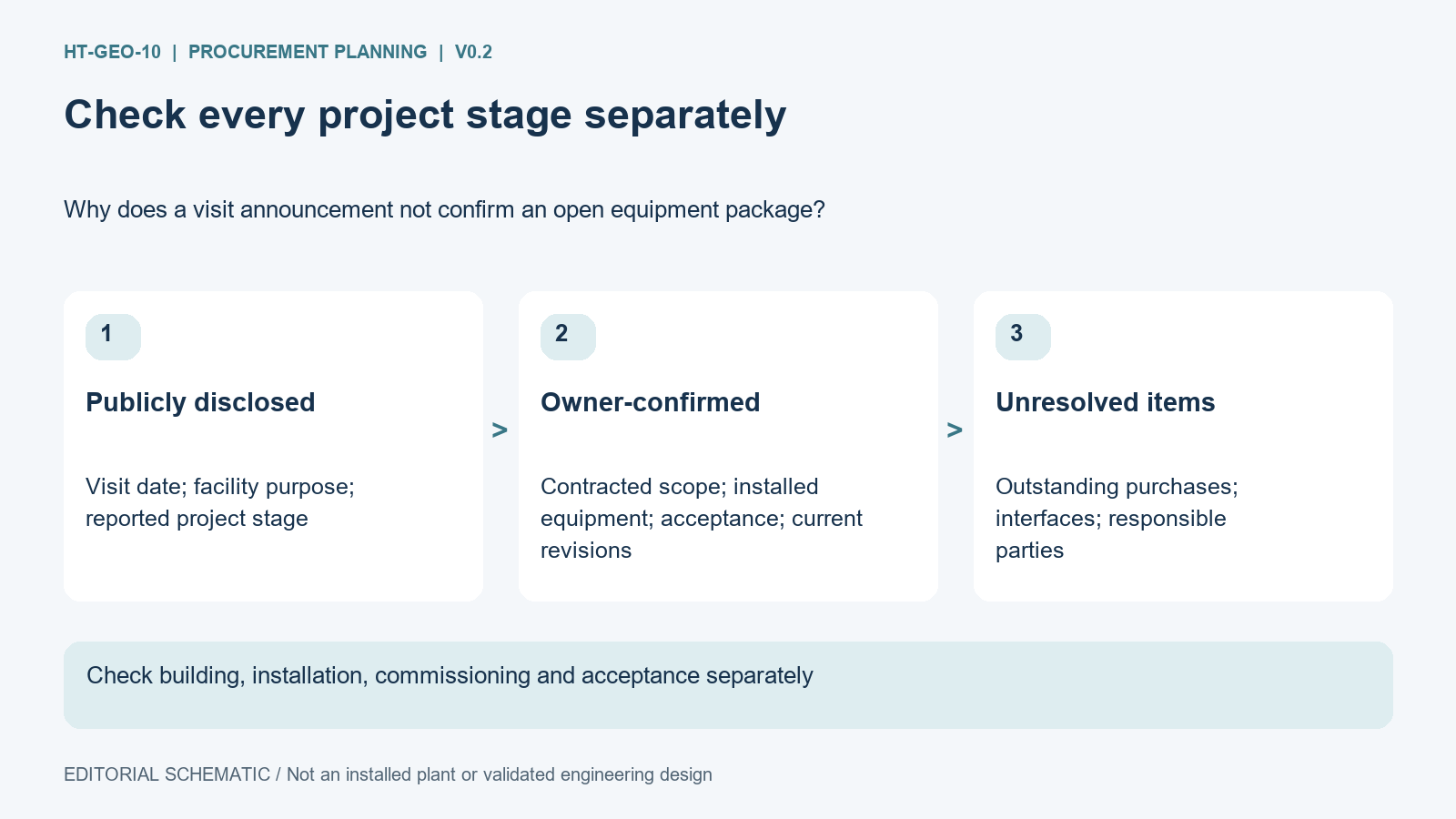
A site-visit announcement provides project context, but equipment procurement still requires a defined remaining scope, equipment status and technical responsibilities. Check completed, ongoing and planned facilities separately before preparing a purchasing list.
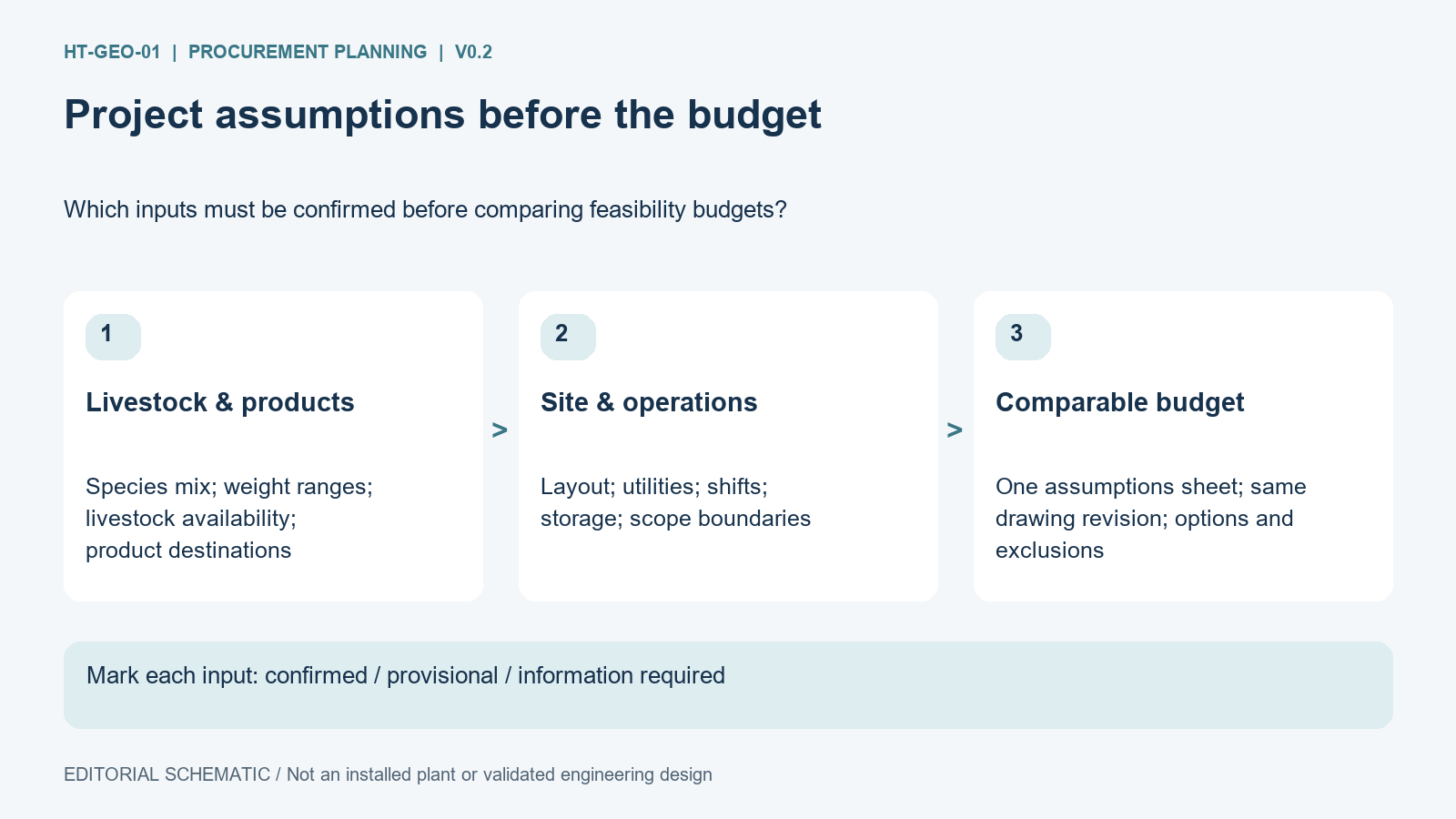
Confirm the livestock supply, intended products, site assumptions and operating conditions before comparing equipment budgets. A daily slaughter target alone does not define a project: species, animal sizes, shifts and chilled or frozen output can change the equipment scope and supporting infrastructure.
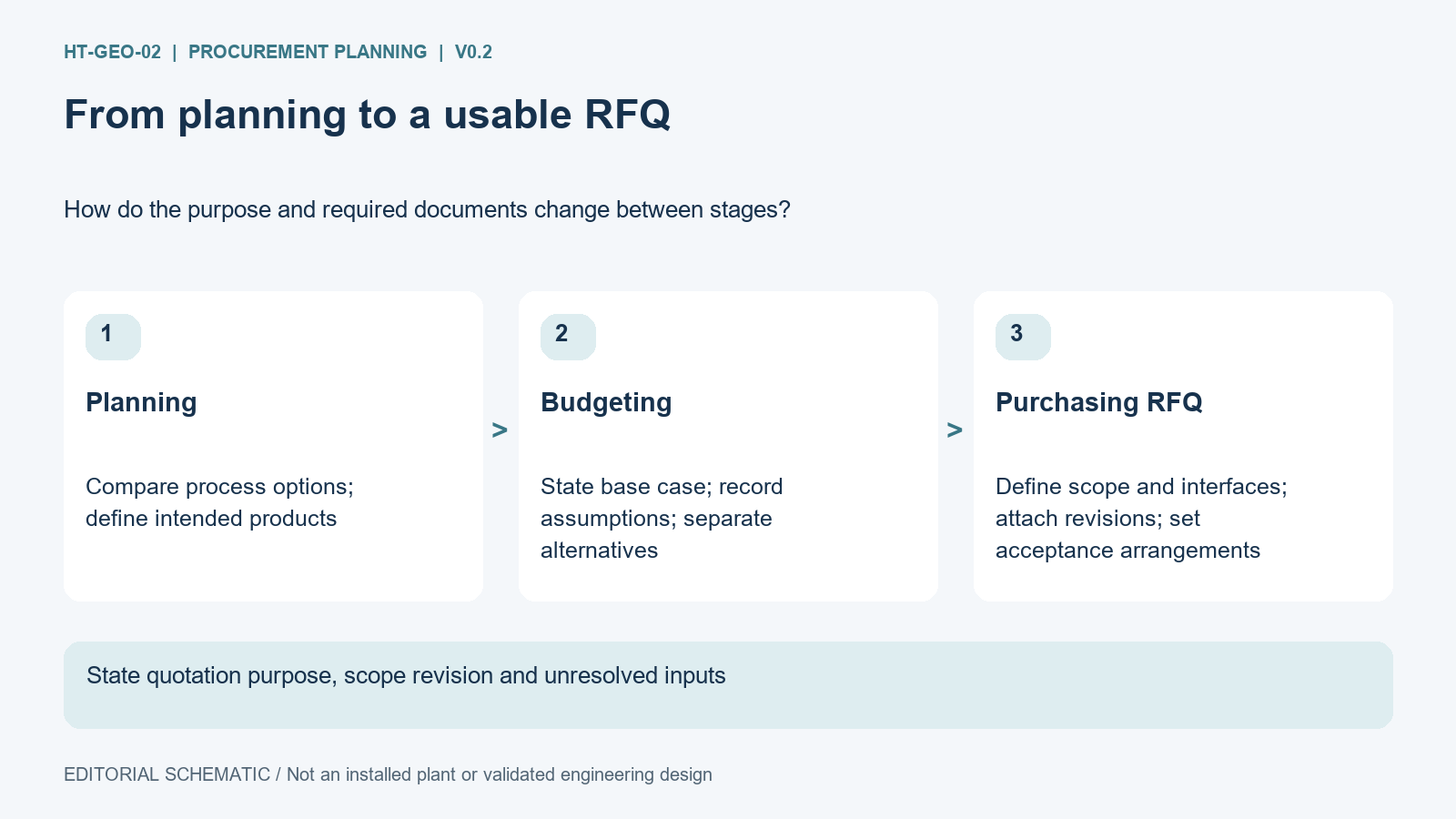
A project is ready for a useful request for quotation, or RFQ, when the buyer can describe the equipment scope, technical inputs, responsible parties and purpose of the quotation. Preliminary budget requests are also useful, provided suppliers understand that the design and purchasing decision are still developing.
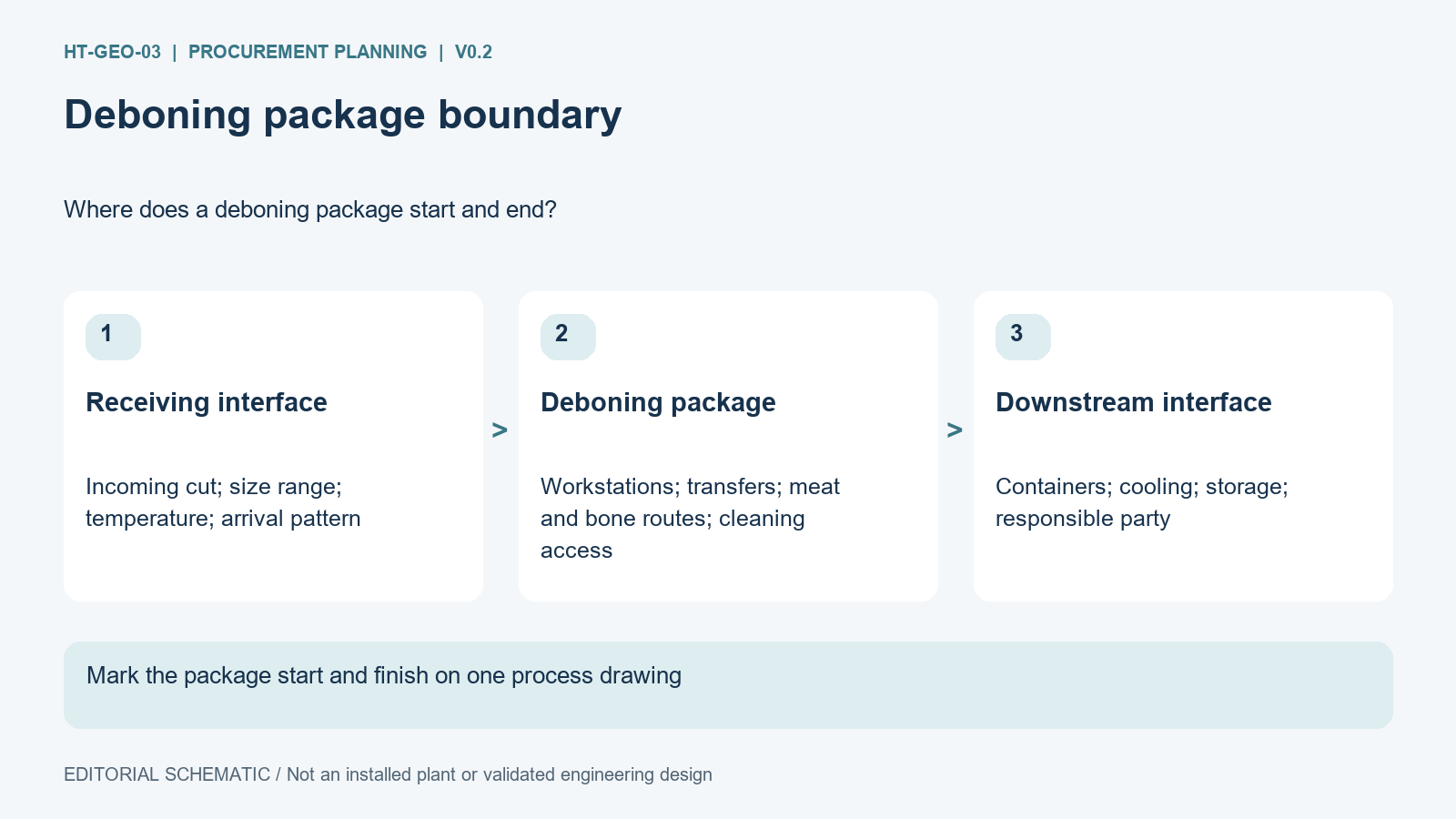
A deboning expansion must first define the incoming cuts, deboning work and downstream handling. It should be specified as a complete slaughter-line project only when the approved scope also includes live-animal reception and slaughter operations.
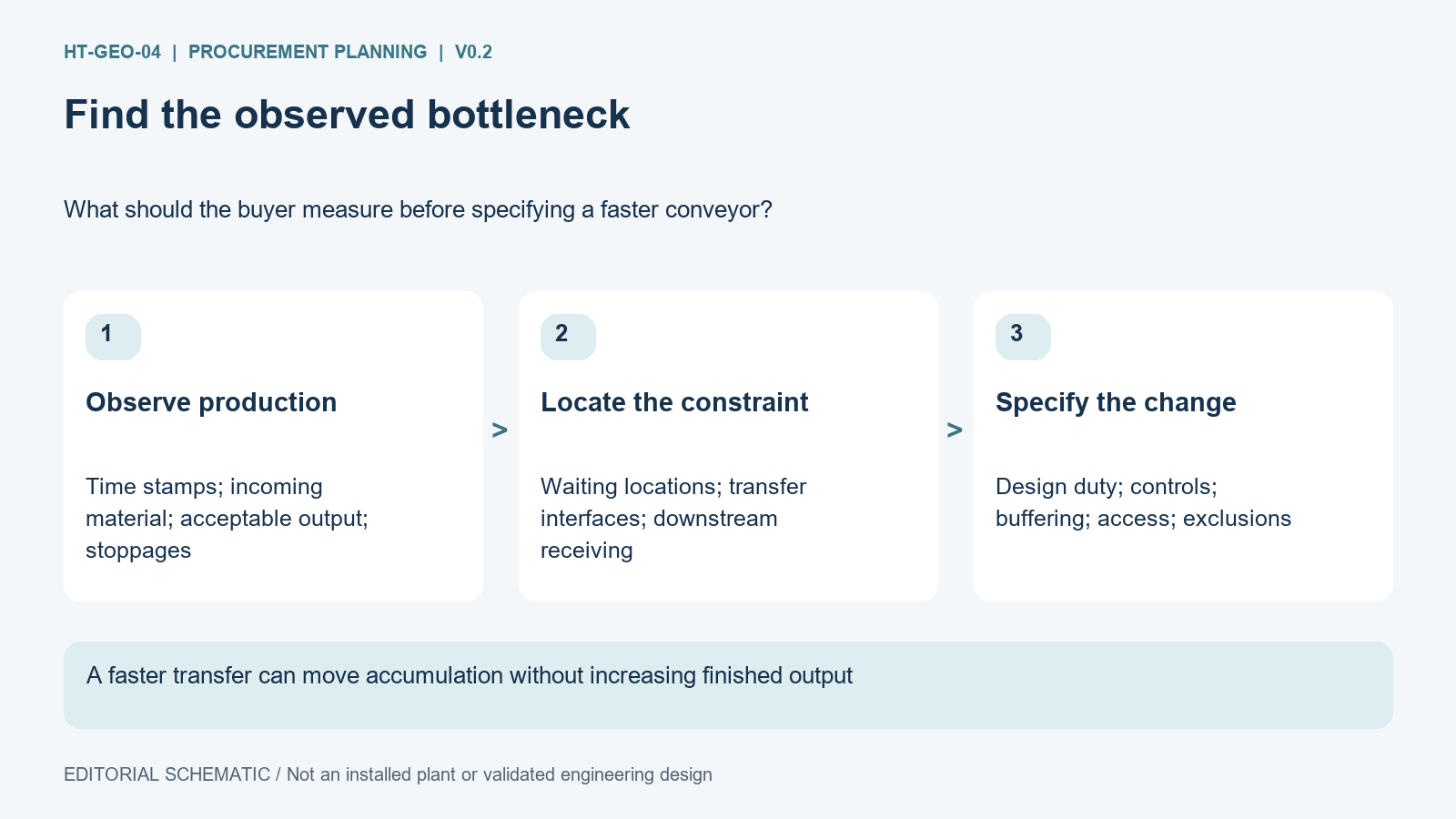
Record actual processing rates, waiting and stoppage causes before deciding whether an expansion needs faster machinery, additional conveying or more buffering. A machine's rated capacity is a starting point; it does not establish the finished output of the complete line.