How do planning, budgeting and purchasing differ?
HT-GEO-02 | PROCUREMENT PLANNING | V0.2
From planning to a usable RFQ
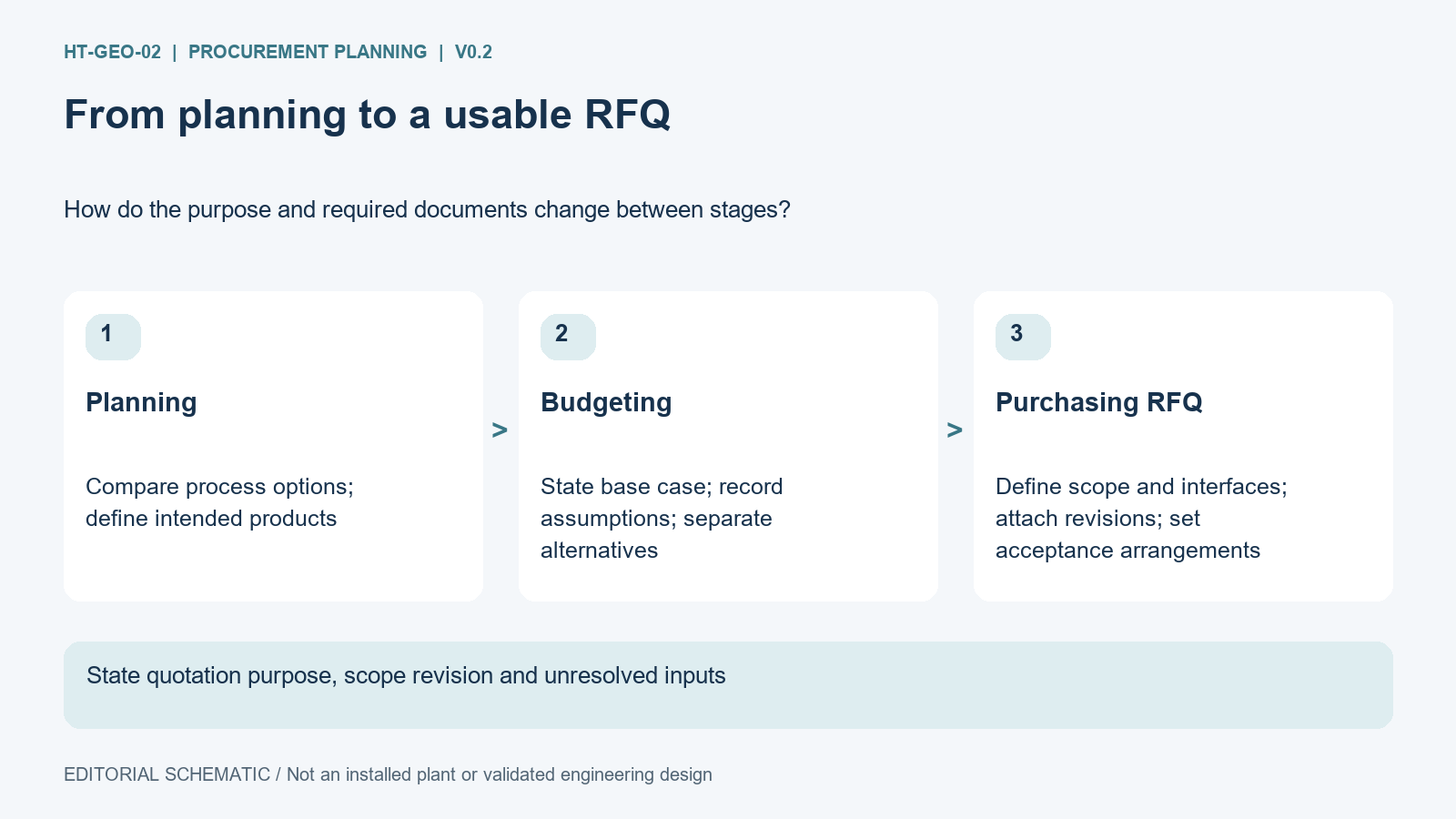
How do the purpose and required documents change between stages?
- Planning
Compare process options; define intended products
- Budgeting
State base case; record assumptions; separate alternatives
- Purchasing RFQ
Define scope and interfaces; attach revisions; set acceptance arrangements
State quotation purpose, scope revision and unresolved inputs
EDITORIAL SCHEMATIC / Not an installed plant or validated engineering designPlanning compares process options. Budgeting estimates the investment required. A purchasing RFQ asks suppliers to make comparable proposals against a defined scope. All three stages may involve prices, so the word “quotation” alone does not establish procurement readiness.
IFC's AFISA I disclosure refers to feasibility work, while Danish Crown's Vejen announcement identifies a particular deboning operation and planned throughput. These examples contain different levels of project detail; neither announcement alone confirms an equipment package is currently open for bids. IFC disclosure, Danish Crown announcement
What should the RFQ contain?
Specify the species or incoming material, finished products, throughput units, working schedule and installation location. Include available layouts, equipment interfaces, document revisions, quotation deadline and technical contact. Define the proposed delivery scope and acceptance arrangements.
Mark missing information explicitly. Tell suppliers whether they may propose assumptions and how those assumptions should be presented. Without that instruction, proposals can appear comparable while covering different duties.
“Complete slaughterhouse equipment” is especially ambiguous. One supplier may include machinery only; another may include controls, installation or commissioning. List these responsibilities before comparing totals.
How should the buyer check the current purchasing status?
Confirm the latest scope revision, packages already awarded and items still requiring quotations with the project team. A recent news article may discuss an earlier decision. Likewise, a planned opening date that has passed does not prove that a project is delayed.
No local equipment tender has been obtained for this article. The checklist is an editorial procurement method, not the bidding procedure or eligibility criteria of either named project.
Buyer’s next step: Add three fields to the RFQ cover sheet: quotation purpose, scope revision and unresolved inputs. Use the same cover sheet for every candidate supplier.
Questions before you decide
Does a public project announcement confirm an open equipment order?
No. Confirm the current facility and package status, remaining scope, responsible project contact and technical documents. Public news or an investment total is background information, not proof of an open tender or a specific purchasing intention.
How can I make supplier quotations comparable?
Issue one scope revision, incoming-material specification, operating assumptions and interface brief. Require suppliers to identify machinery, utilities, installation, documents, responsibilities and exclusions separately.
Which unresolved points should be listed before requesting a quotation?
List missing drawings, model/configuration details, site conditions, acceptance arrangements and supply responsibilities. Identify an owner for each open point and clarify whether the request is preliminary budgeting or a defined purchasing package.