Pig Hoof Dehairing Machine | HT-P618-I
Pig Hoof Dehairing Machine. Compare incoming condition, product range and processing duty; share your requirements for configuration review.
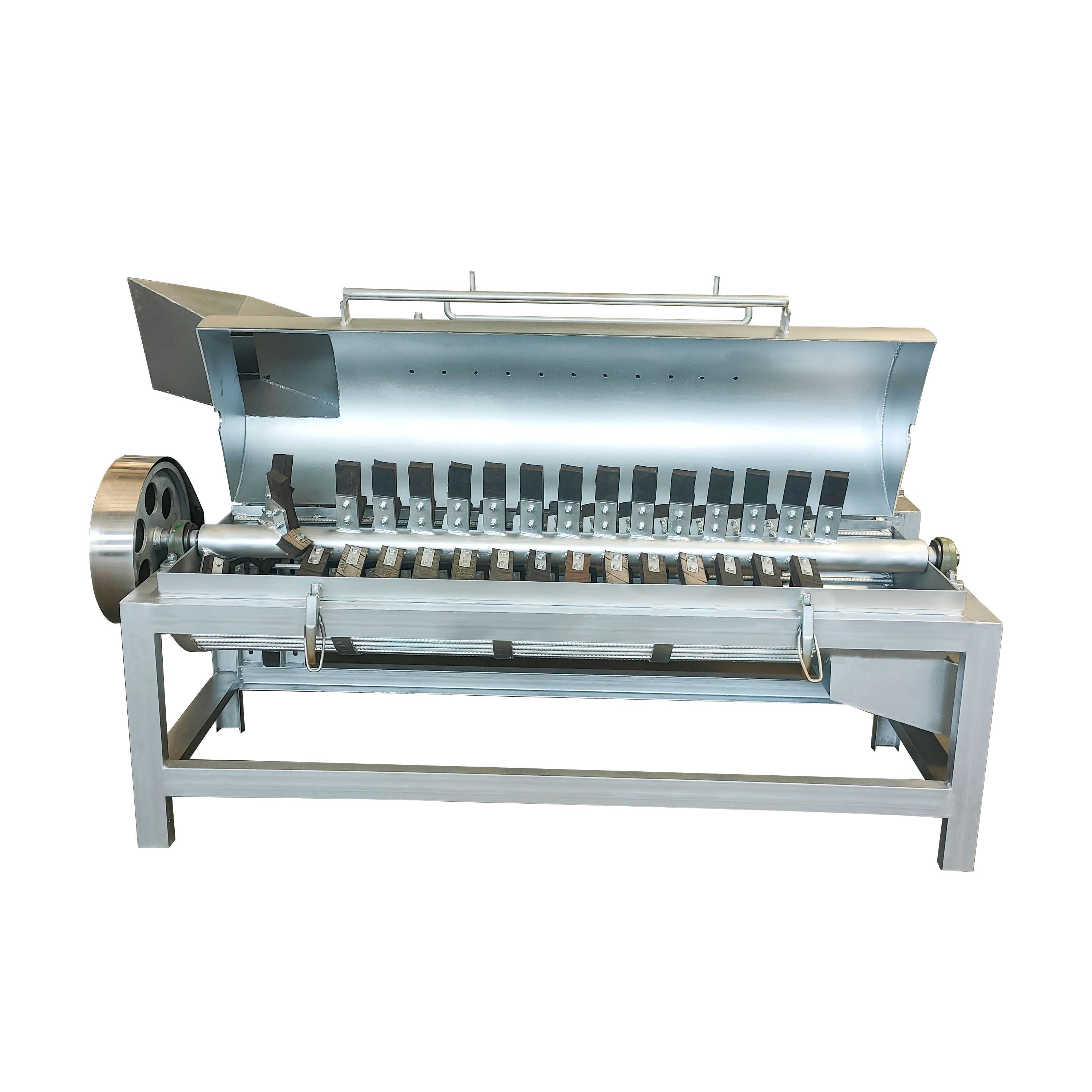
Supplied product-directory reference image: equipment family or process context. It is not proof of an exact model, HUATAO installation or certification. Confirm the proposed configuration photograph and drawing before ordering.
Specification notes
| Model | HT-P618-I |
|---|---|
| Rated voltage/Phase/Frequency | 380V/3P/50HZ |
| Power | 4.5kw |
| Out size | 3100*850*1500 mm(L*W*H) |
| Component and material | 1) Hot galvanized steel or Stainless steel main frame 2)Stainless steel roller 3)Spindle with rubber plate and Water spring pipe and Screw steel bar |
| Data status | Source reference R1; configuration requires written confirmation |
Use and process role
The Pig Hoof Dehairing Machine is designed as a mechanical hair-removal machine for scalded pig carcasses, heads or hooves. It should be treated as part of the process flow, not as a stand-alone catalogue item. The HT listing supplies reference data for the offered arrangement; those figures are reproduced below for comparison. For export quotations, confirm voltage, materials, guarding, spare parts and documentation before the purchase order is released.
Structure and working principle
Rotating drums, paddles, scrapers or beaters contact the scalded surface and lift loosened hair. Water flushes hair away while the machine controls dwell time and product movement toward discharge. During commissioning, the sequence should be tested first without product and then under a representative load.
Source-listed construction and features
Duty matched to product size and throughput
Replaceable scraping or beating elements
Contained hair and water discharge
Openable guards for cleaning
Drive protection against overload
Straightforward wear-part replacement
Applications and integration
The usual application is small batch plants through high-capacity continuous pig slaughter lines. It can be specified for a new line or adapted to a retrofit, provided that the existing supports, working heights, utilities and control signals are measured on site. Plants handling several pig sizes should state the full range rather than quoting only an average.
Selection conditions and project fit
State species, incoming weight and temperature range, upstream scalding condition, required rate, discharge height, water or energy supply and by-product collection. Agree product quality criteria under the actual input conditions.
Evidence, configuration and document status
The descriptions and tables below are source-listed reference information, not independently measured results. Confirm material grade, electrical supply, dimensions, duty, guards, controls and delivery scope in the approved quotation and drawing. No model-specific certificate or verified customer installation is established by this page. Request the document issuer, applicable model, scope and revision before relying on a compliance claim.
Source and version
Reference compilation R1, 2026-11-16. Supplied document: 2. 烫脱毛,剥皮,掏脏设备.doc; section 2.4. Configuration rows retain source units. Where the source lists alternatives or several models, each row must be checked as a separate configuration; a capacity or dimension must not be transferred between models.
Installation and process interfaces
State the upstream scalding/preparation condition, animal or product range, required rate, discharge height, water or energy connections and collection of hair, feathers or other by-products.
Utilities, control and feedback requirements
Confirm the actual drive arrangement, adjustment range and control scope. Compare performance only under defined input and process conditions; reference rates are not an unconditional yield or quality commitment.
Maintenance and part identification
Request the configuration-specific manual and part references for fingers, rubber elements, scrapers, rollers and drive parts where fitted. Agree quantities and replenishment needs against actual duty and delivery experience. This page does not prescribe maintenance intervals, repairs or a guaranteed stock position.
Configuration-specific document checklist
Before purchase, identify the complete model and suffix, configuration table and drawing revision. Request the applicable layout/interface drawing, specification, manual, parts list and agreed inspection or test records. Performance curves or certificates should be linked only when an applicable original exists; a reference summary is not a substitute.
Source-unit confirmation required
The supplied reference does not explicitly state a unit for these fields: Temperature. The original entries are retained rather than assigning an assumed unit. Confirm the units, matching configuration and operating conditions before comparing these figures or approving a quotation.
Compare configurations for your project
For Pig Hoof Dehairing Machine | HT-P618-I, keep the complete identifier HT-P618-I attached to its own source configuration. Compare process duty, incoming animal or product range, target output, utilities, installation envelope and upstream/downstream interfaces under the same project conditions. A higher catalogue rate alone does not establish a better fit.
Start with this page's listed reference fields: Rated voltage/Phase/Frequency: 380V/3P/50HZ; Power: 4.5kw; Out size: 3100*850*1500 mm(L*W*H); Component and material: 1) Hot galvanized steel or Stainless steel main frame 2)Stainless steel roller 3)Spindle with rubber plate and Water spring pipe and Screw steel bar. Confirm units, conditions and revision against the quoted configuration; do not transfer values to another model.
Compare alternative quotations only after each supplier identifies the complete model, configuration and matching documents. No universal suffix meaning or unsupported advantage over another model is asserted.
Purchasing review and enquiry preparation
Start with Pig Hoof Dehairing Machine | HT-P618-I and its specification/source notes. Download the linked reference summary, then request the original configuration-specific drawing and current technical documents. The summary is not an approved drawing, certificate or acceptance record.
Use the linked pig processing application and purchasing guidance to review process interfaces, selection conditions and the proposed supply boundary. Verify which manufacturer, supplier and installation responsibilities are included; a reference photo does not establish factory ownership, certification or a completed HUATAO installation.
Before enquiry, prepare animal species or incoming product, size/weight range, target throughput, operating shifts, destination, available utilities and a layout or interface drawing. Quote HT-P618-I and identify the missing documents or conditions you need checked. Use the enquiry on this page so the product and original source page are retained.
| Parameter | Reference Value / Buyer Check |
|---|---|
| Model | HT-P618-I |
| Application | Which main used for pig hooves dehairing |
| Rated voltage/Phase/Frequency | 380V/3P/50HZ |
| Power | 4.5kw |
| Weight | 850Kg |
| Out size | 3100*850*1500 mm(L*W*H) |
| Temperature | -25 0 C~40 0 C |
| Component and material | 1) Hot galvanized steel or Stainless steel main frame 2)Stainless steel roller 3)Spindle with rubber plate and Water spring pipe and Screw steel bar |
| Quotation control | State scalding method, product weight range, heads per hour, batch size, available water, hair collection route, motor standard and the required discharge height. |
Buyer FAQ
What information is needed to quote the Pig Hoof Dehairing Machine?
State scalding method, product weight range, heads per hour, batch size, available water, hair collection route, motor standard and the required discharge height.
Which spare parts should be ordered with the machine?
Start with the normal wear and hygiene parts for this duty: bearings, seals, sensors, chains or belts, nozzles, blades, scrapers, pneumatic parts and electrical protection devices as applicable. The supplier should issue a model-specific list.
Are the published technical figures final?
No. The table records reference information from the citedHTpage. Capacity, power, dimensions, material grade and utilities must be confirmed on the quotation and approved drawing.
How should the equipment be accepted after installation?
Use a documented site-acceptance test covering alignment, guards, emergency stops, interlocks, dry running, representative load, cleaning access, leakage or drainage, operator training and delivery of manuals and spares.
What information is needed to select this equipment?
State species, incoming weight and temperature range, upstream scalding condition, required rate, discharge height, water or energy supply and by-product collection. Agree product quality criteria under the actual input conditions.
Are these specifications an approved supply commitment?
No. These are source reference details. The quotation must identify the exact configuration, drawing revision, included documents and agreed acceptance criteria.
Related configurations and guidance
Reference specification and document status
Download HT-P618-I reference specification and verification checklist
This reference is not an approved manufacturing drawing, inspection report or certificate. Request the configuration-specific documents before purchase.