Poultry Carcass Rehanging Chute for Chicken Processing Line | HT-CRC
Poultry Carcass Rehanging Chute. Compare load range, dimensions and process interfaces; share your requirements for configuration review.
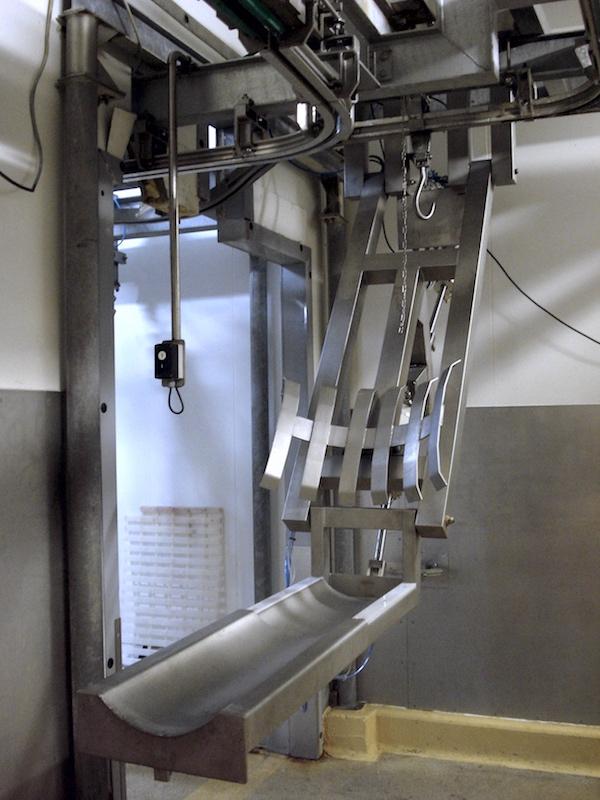
Specification notes
| Model | HT-CRC |
|---|---|
| Main Material | SUS304 Stainless Steel |
| Processing Capacity | Up to 12000 BPH |
| Material Standard | Food Grade Stainless Steel |
| Capacity Range | 3000-12000 BPH |
| Data status | Source reference R1; configuration requires written confirmation |
Use and process role
Chicken Carcass Transfer Chute After Defeathering Process
The Poultry Carcass Rehanging Chute is specially designed for transferring chicken carcasses between different processing stages in modern poultry slaughterhouses.
After defeathering, chicken carcasses need to be transferred from the dirty processing section to the next clean processing area, such as evisceration or chilling.
Traditional manual transfer methods require more labor and may affect production efficiency. The carcass rehanging chute provides a simple and reliable solution for guiding carcasses smoothly into the next hanging position.
The equipment helps:
Improve carcass transfer efficiency
Reduce manual handling
Maintain continuous production flow
Improve processing hygiene
Huatao carcass rehanging chute is made of food-grade stainless steel and can be customized according to:
Conveyor height
Processing capacity
Factory layout
Shackle specifications
In poultry processing plants, rehanging is an important step between primary processing and further processing because carcasses are transferred to cleaner shackles or downstream lines for evisceration and chilling.
Structure and working principle
The carcass rehanging chute works by using a specially designed guiding structure to transfer chicken carcasses from the previous processing section to the next hanging position.
During operation:
Defeathered carcasses enter the chute from the upstream conveyor.
The inclined stainless steel guide surface supports and directs the carcass movement.
Workers or downstream hanging devices place the carcasses onto the next shackle system.
The carcasses continue to the following processing stage.
The smooth chute design reduces carcass impact and ensures stable product transfer.
Source-listed construction and features
1. Smooth Carcass Transfer Design
The chute provides a controlled transfer path between processing sections.
Benefits:
Reduces carcass falling damage
Improves transfer stability
Supports continuous production
2. Food Grade Stainless Steel Structure
The complete structure is manufactured from SUS304 stainless steel.
Applications and integration
The poultry carcass rehanging chute is mainly used in chicken slaughterhouses where carcasses need to be transferred between different processing areas.
After defeathering, carcasses usually move from the primary processing section to the evisceration section. During this transition, the carcasses may need to be rehung onto another conveyor system.
The chute provides a stable transfer solution for:
Broiler processing plants
Chicken slaughterhouses
Frozen poultry factories
Integrated poultry production facilities
Typical installation locations include:
Between plucking and evisceration lines
Between different conveyor systems
Before chilling or further processing sections
For high-speed poultry plants, automatic rehanging systems can also be used to synchronize transfer between lines and improve processing efficiency.
Selection conditions and project fit
Provide rail or belt dimensions, working height, travel direction, carrier spacing, load range, speed and upstream/downstream connection drawings. A similar-looking carrier is not proof of fit.
Evidence, configuration and document status
The descriptions and tables below are source-listed reference information, not independently measured results. Confirm material grade, electrical supply, dimensions, duty, guards, controls and delivery scope in the approved quotation and drawing. No model-specific certificate or verified customer installation is established by this page. Request the document issuer, applicable model, scope and revision before relying on a compliance claim.
Source and version
Reference compilation R1, 2026-11-16. Supplied document: 2. 家禽屠宰设备 - 屠宰,烫 脱.doc; section 2.18. Configuration rows retain source units. Where the source lists alternatives or several models, each row must be checked as a separate configuration; a capacity or dimension must not be transferred between models.
Installation and process interfaces
Provide the load and product range, travel direction, rail/belt section or mating geometry, working heights, supports and maintenance clearances. Similar appearance is not proof of fit.
Utilities, control and feedback requirements
For powered equipment, confirm the matching drive, supply, control and line signals. For passive components, confirm mechanical interfaces and any requirements of the receiving equipment; no powered or feedback capability should be assumed.
Maintenance and part identification
Request the configuration-specific manual and part references for rollers, chains, hooks, bearings, guides and drive elements where applicable. Agree quantities and replenishment needs against actual duty and delivery experience. This page does not prescribe maintenance intervals, repairs or a guaranteed stock position.
Configuration-specific document checklist
Before purchase, identify the complete model and suffix, configuration table and drawing revision. Request the applicable layout/interface drawing, specification, manual, parts list and agreed inspection or test records. Performance curves or certificates should be linked only when an applicable original exists; a reference summary is not a substitute.
Compare configurations for your project
For Poultry Carcass Rehanging Chute for Chicken Processing Line | HT-CRC, keep the complete identifier HT-CRC attached to its own source configuration. Compare process duty, incoming animal or product range, target output, utilities, installation envelope and upstream/downstream interfaces under the same project conditions. A higher catalogue rate alone does not establish a better fit.
Start with this page's listed reference fields: Main Material: SUS304 Stainless Steel; Processing Capacity: Up to 12000 BPH; Material Standard: Food Grade Stainless Steel; Capacity Range: 3000-12000 BPH. Confirm units, conditions and revision against the quoted configuration; do not transfer values to another model.
Compare alternative quotations only after each supplier identifies the complete model, configuration and matching documents. No universal suffix meaning or unsupported advantage over another model is asserted.
Purchasing review and enquiry preparation
Start with Poultry Carcass Rehanging Chute for Chicken Processing Line | HT-CRC and its specification/source notes. Download the linked reference summary, then request the original configuration-specific drawing and current technical documents. The summary is not an approved drawing, certificate or acceptance record.
Use the linked poultry processing application and purchasing guidance to review process interfaces, selection conditions and the proposed supply boundary. Verify which manufacturer, supplier and installation responsibilities are included; a reference photo does not establish factory ownership, certification or a completed HUATAO installation.
Before enquiry, prepare animal species or incoming product, size/weight range, target throughput, operating shifts, destination, available utilities and a layout or interface drawing. Quote HT-CRC and identify the missing documents or conditions you need checked. Use the enquiry on this page so the product and original source page are retained.
| Parameter | Specification |
|---|---|
| Product Name | Poultry Carcass Rehanging Chute |
| Brand | Huatao |
| Model Series | HT-CRC Series |
| Application | Carcass Transfer Between Processing Sections |
| Suitable Poultry | Chicken / Broiler |
| Installation Position | After Plucking Section |
| Transfer Method | Gravity Sliding / Manual Rehanging |
| Structure Type | Stainless Steel Chute |
| Main Material | SUS304 Stainless Steel |
| Surface Finish | Smooth Food Grade Surface |
| Chute Length | Customized |
| Chute Width | Customized |
| Installation Height | Customized According to Line Layout |
| Compatible Conveyor | Overhead Shackle Conveyor |
| Bird Weight Range | Customized |
| Processing Capacity | Up to 12000 BPH |
| Cleaning Method | Water Washing |
| Maintenance Requirement | Low Maintenance |
| Installation Type | Integrated Processing Line |
| Item | Specification |
|---|---|
| Transfer Product | Defeathered Chicken Carcass |
| Processing Stage | Plucking → Evisceration |
| Operation Mode | Continuous Transfer |
| Material Standard | Food Grade Stainless Steel |
| Capacity Range | 3000-12000 BPH |
| Customization | Available |
Buyer FAQ
What is a poultry carcass rehanging chute?
It is equipment used to guide and transfer chicken carcasses between different processing lines after defeathering.
Where is the chute installed?
Normally installed between the plucking section and evisceration line.
What is the difference between a rehanging chute and automatic rehanger?
chute is a simple transfer structure mainly for guiding carcasses, while an automatic rehanger uses mechanical systems to automatically transfer carcasses between conveyor lines.
What material is used?
Mainly SUS304 stainless steel suitable for food processing.
What information is needed to select this equipment?
Provide rail or belt dimensions, working height, travel direction, carrier spacing, load range, speed and upstream/downstream connection drawings. A similar-looking carrier is not proof of fit.
Are these specifications an approved supply commitment?
No. These are source reference details. The quotation must identify the exact configuration, drawing revision, included documents and agreed acceptance criteria.
Related configurations and guidance
Reference specification and document status
Download HT-CRC reference specification and verification checklist
This reference is not an approved manufacturing drawing, inspection report or certificate. Request the configuration-specific documents before purchase.