Food Metal Detector for Poultry Processing Line
Food Metal Detector. Compare product dimensions, package format and line speed; share your requirements for configuration review.
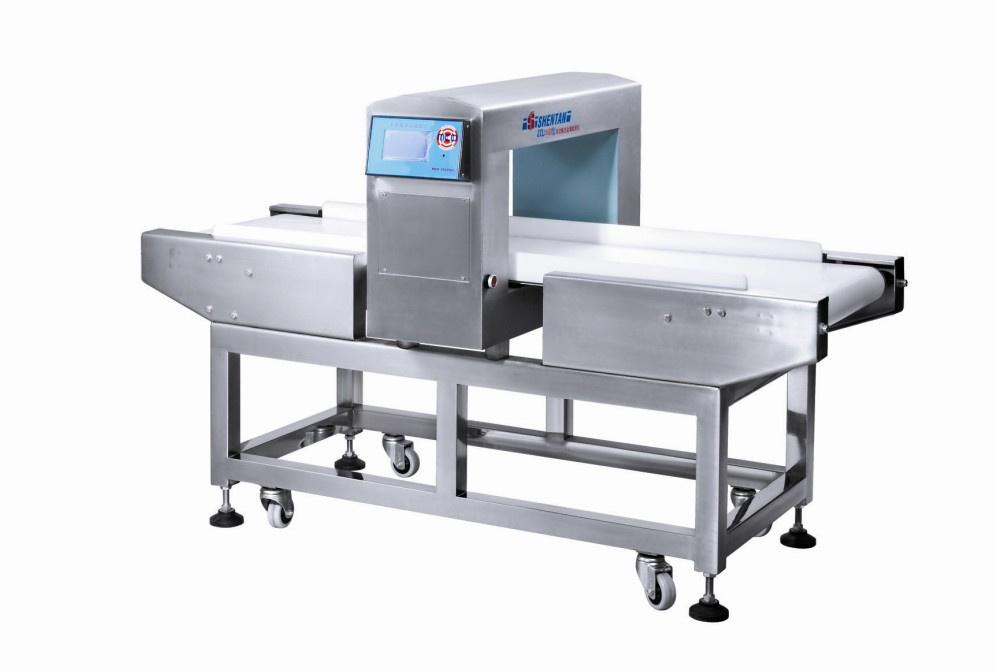
Specification notes
| Model status | Product family; exact model not identified in the supplied section |
|---|---|
| Structure Material | SUS304 Stainless Steel |
| Power Supply | 220V 50Hz / Customized |
| Data status | Source reference R1; configuration requires written confirmation |
Use and process role
Food Metal Detector for Poultry Processing Line
The Food Metal Detector is an essential inspection device designed for poultry processing plants, food factories, and meat production facilities to ensure product safety before packaging and distribution.
During poultry processing, metal contamination may occur due to equipment wear, broken machine components, cutting tools, or accidental foreign materials entering the production process. The food metal detector provides a reliable solution by detecting metallic contaminants before products reach customers.
The system is mainly installed on conveyor lines after cutting, grading, freezing, or packing processes. It automatically inspects chicken products and detects ferrous metals, non-ferrous metals, and stainless steel particles with high sensitivity.
Designed with stainless steel construction and hygienic food-grade materials, this conveyor metal detector is suitable for demanding environments such as poultry slaughterhouses, meat processing plants, and frozen food factories.
Modern food inspection systems help processors improve quality control, reduce product recalls, and meet international food safety requirements.
Structure and working principle
The Food Metal Detector uses electromagnetic detection technology based on a balanced coil system.
When poultry products pass through the detection tunnel on the conveyor belt, the sensor generates a controlled electromagnetic field. If metallic particles exist inside the product, they disturb the electromagnetic field and create a signal change.
The control system analyzes the signal and determines whether metal contamination is present. When a metal object is detected, the system activates an automatic rejection device, such as an air blast, push arm, or conveyor stop mechanism, to remove the contaminated product from the production line.
The entire inspection process operates automatically without interrupting normal production.
Source-listed construction and features
1. High Sensitivity Metal Detection
Detects ferrous metals
Detects non-ferrous metals
Detects stainless steel particles
Stable detection performance under continuous operation
2. Automatic Product Rejection
Equipped with optional rejection systems:
Air blast reject
Push arm reject
Drop flap reject
Conveyor stop alarm
3. Food Grade Stainless Steel Design
SUS304 stainless steel structure
Waterproof and corrosion resistant
Easy cleaning and maintenance
Suitable for wet poultry processing environments
4. Intelligent Control System
Features:
Touch screen operation
Automatic calibration
Product memory storage
Detection parameter adjustment
Alarm records
5. Strong Anti-Interference Performance
Stable operation near motors and conveyors
Reduces false alarms
Suitable for high-speed production lines
6. Easy Integration
Can be installed with:
Poultry packing lines
Chicken grading systems
Conveyor systems
Frozen food production lines
Applications and integration
The Food Metal Detector is widely used in poultry and food processing industries where product safety inspection is required.
Typical applications include:
Poultry Processing
Whole chicken products
Chicken breast
Chicken wings
Chicken legs
Chicken nuggets
Frozen poultry products
Meat Processing
Beef products
Pork products
Sausage production
Food Packing Lines
Ready-to-eat food
Frozen food
Retail food packages
For poultry processing plants, the equipment is usually installed after cutting, portioning, freezing, or before final packaging to ensure finished products are free from metal contamination.
Selection conditions and project fit
State product dimensions and condition, package type, line speed, inspection or sealing criteria, utility supply and integration signals. Confirm performance using the intended product and packaging.
Evidence, configuration and document status
The descriptions and tables below are source-listed reference information, not independently measured results. Confirm material grade, electrical supply, dimensions, duty, guards, controls and delivery scope in the approved quotation and drawing. No model-specific certificate or verified customer installation is established by this page. Request the document issuer, applicable model, scope and revision before relying on a compliance claim.
Source and version
Reference compilation R1, 2026-11-16. Supplied document: 8. 称重分级设备 SORTING AND PACKING.doc; section 8.3. Configuration rows retain source units. Where the source lists alternatives or several models, each row must be checked as a separate configuration; a capacity or dimension must not be transferred between models.
Installation and process interfaces
State product size, temperature or condition, package type, feed/discharge height and direction, service access and the required connection to the preceding conveyor.
Utilities, control and feedback requirements
Confirm electrical and other required supplies, start/stop signals and any detection, rejection, sealing or data functions in the actual configuration. Agree trials using the intended product and packaging.
Maintenance and part identification
Request the configuration-specific manual and part references for belts, seals, sensors and packaging or inspection components included in the arrangement. Agree quantities and replenishment needs against actual duty and delivery experience. This page does not prescribe maintenance intervals, repairs or a guaranteed stock position.
Configuration-specific document checklist
Before purchase, identify the complete model and suffix, configuration table and drawing revision. Request the applicable layout/interface drawing, specification, manual, parts list and agreed inspection or test records. Performance curves or certificates should be linked only when an applicable original exists; a reference summary is not a substitute.
Source-unit confirmation required
The supplied reference does not explicitly state a unit for these fields: Working Temperature. The original entries are retained rather than assigning an assumed unit. Confirm the units, matching configuration and operating conditions before comparing these figures or approving a quotation.
Compare configurations for your project
For Food Metal Detector for Poultry Processing Line, keep the complete identifier the proposed complete model and configuration attached to its own source configuration. Compare process duty, incoming animal or product range, target output, utilities, installation envelope and upstream/downstream interfaces under the same project conditions. A higher catalogue rate alone does not establish a better fit.
Start with this page's listed reference fields: Model status: Product family; exact model not identified in the supplied section; Structure Material: SUS304 Stainless Steel; Power Supply: 220V 50Hz / Customized. Confirm units, conditions and revision against the quoted configuration; do not transfer values to another model.
Compare alternative quotations only after each supplier identifies the complete model, configuration and matching documents. No universal suffix meaning or unsupported advantage over another model is asserted.
Purchasing review and enquiry preparation
Start with Food Metal Detector for Poultry Processing Line and its specification/source notes. Download the linked reference summary, then request the original configuration-specific drawing and current technical documents. The summary is not an approved drawing, certificate or acceptance record.
Use the linked poultry processing application and purchasing guidance to review process interfaces, selection conditions and the proposed supply boundary. Verify which manufacturer, supplier and installation responsibilities are included; a reference photo does not establish factory ownership, certification or a completed HUATAO installation.
Before enquiry, prepare animal species or incoming product, size/weight range, target throughput, operating shifts, destination, available utilities and a layout or interface drawing. Quote the proposed complete model and configuration and identify the missing documents or conditions you need checked. Use the enquiry on this page so the product and original source page are retained.
| Parameter | Specification |
|---|---|
| Product Name | Food Metal Detector |
| Application | Poultry / Meat / Food Inspection |
| Detection Type | Electromagnetic Induction |
| Detection Metals | Ferrous, Non-ferrous, Stainless Steel |
| Structure Material | SUS304 Stainless Steel |
| Conveyor Type | Food Grade Belt Conveyor |
| Belt Width | 300mm / 400mm / 500mm / Customized |
| Detection Accuracy | Fe ≥1.0mm (Depending on Model) |
| Stainless Steel Detection | SS304/316 Detection Capability |
| Conveyor Speed | 20-40 m/min (Customized) |
| Control System | PLC + Touch Screen |
| Protection Grade | IP65 / IP66 Waterproof |
| Power Supply | 220V 50Hz / Customized |
| Reject System | Air Blow / Push Arm / Drop Flap |
| Working Temperature | -10℃ to +45℃ |
Buyer FAQ
What metals can the food metal detector detect?
The machine can detect: Iron (Fe) Copper and aluminum (Non-Fe) Stainless steel (SS304/SS316)
Where should the metal detector be installed in a poultry processing line?
It is commonly installed: fter cut-up processing Before packing fter freezing Before final shipment inspection
What information is needed to select this equipment?
State product dimensions and condition, package type, line speed, inspection or sealing criteria, utility supply and integration signals. Confirm performance using the intended product and packaging.
Are these specifications an approved supply commitment?
No. These are source reference details. The quotation must identify the exact configuration, drawing revision, included documents and agreed acceptance criteria.
Related configurations and guidance
Reference specification and document status
This reference is not an approved manufacturing drawing, inspection report or certificate. Request the configuration-specific documents before purchase.