Cattle Carcass Breast Skinning Elevator | Pneumatic Lifting Platform for Beef Slaughterhouse
Cattle Carcass Breast Skinning Elevator. Benchmark reference only; share your duty and interfaces to confirm a proposed configuration.
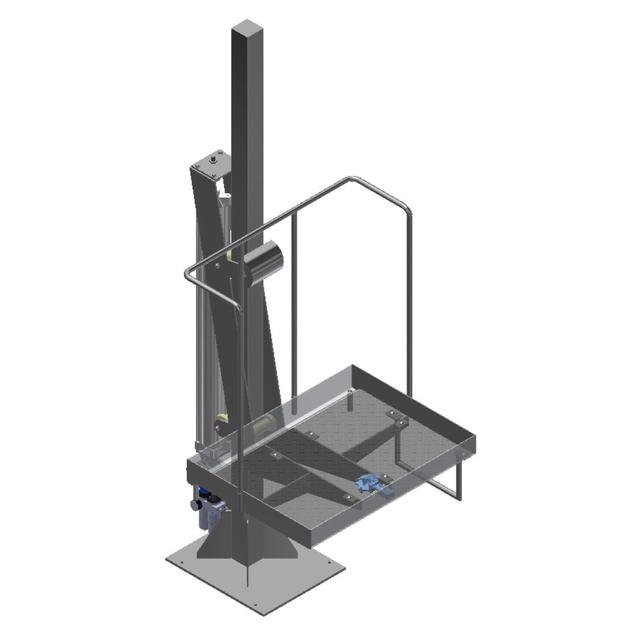
Specification notes
| Model status | Product-family enquiry; no confirmed HUATAO model in this source |
|---|---|
| Reference provenance | Supplied database includes third-party EME / QE benchmark information |
| Data status | Benchmark values below are not HUATAO supply specifications |
Benchmark provenance — configuration not established
The supplied section includes third-party EME / QE reference information. The benchmark tables below are retained for technical comparison and identifying the questions to ask; they do not establish a HUATAO model, manufacturing specification or offered configuration. Request a separate HUATAO quotation and configuration drawing for this equipment family. Third-party model identifiers are not relabelled as HUATAO models.
Use and process role
The Cattle Carcass Breast Skinning Elevator is a specialized pneumatic lifting platform designed for beef slaughterhouses to assist workers during cattle breast hide removal operations.
During cattle skinning processing, the breast and belly areas require precise manual trimming before the automatic or hydraulic hide pulling process. Because cattle carcasses are suspended on an overhead rail system, operators need a safe and adjustable working platform to reach different working positions.
The breast skinning elevator provides a stable elevated working surface, allowing operators to perform:
Breast skin cutting
Hide separation preparation
Detailed trimming operations
The equipment is fixed on the slaughterhouse floor and connected with the carcass conveyor rail system. The lifting height can be adjusted according to carcass position and operator requirements.
According to EME QE-C211-II specifications, the machine includes:
Stainless steel or hot galvanized support pillar
Stainless steel working frame
Anti-slip plastic platform surface
Stainless steel ladder and handrail
Pneumatic lifting cylinder
Pneumatic control system
Water receiving tray
Apron cleaning device
Hand washing and knife sterilizing system
The standard lifting height reaches 1600 mm, with a maximum lifting capacity of 250 kg, making it suitable for industrial cattle slaughter lines.
Structure and working principle
The cattle breast skinning elevator operates through a pneumatic lifting system.
Process sequence
The operator stands on the lifting platform.
The pneumatic cylinder receives compressed air from the control system.
The platform moves vertically according to the required working height.
The operator reaches the cattle breast area comfortably.
Skinning and trimming operations are completed safely.
The platform returns to the original position after operation.
The adjustable lifting design helps maintain an ergonomic working posture and improves skinning consistency.
Source-listed construction and features
1. Pneumatic Height Adjustment
The elevator uses compressed air as the lifting power source.
Applications and integration
The Cattle Carcass Breast Skinning Elevator is mainly used in:
Beef slaughterhouses
Cattle abattoirs
Halal beef processing plants
Meat export processing factories
Typical production process:
Cattle Slaughter → Bleeding → Carcass Hanging → Breast Skin Opening → Skinning Elevator Operation → Hydraulic Hide Pulling → Hide Collection
The equipment is installed beside the overhead carcass conveyor system in the skinning area.
It is especially suitable for slaughterhouses requiring:
Improved worker safety
Higher processing efficiency
Better hide quality control
Selection conditions and project fit
Provide rail or belt dimensions, working height, travel direction, carrier spacing, load range, speed and upstream/downstream connection drawings. A similar-looking carrier is not proof of fit.
Evidence, configuration and document status
The descriptions and tables below are source-listed reference information, not independently measured results. Confirm material grade, electrical supply, dimensions, duty, guards, controls and delivery scope in the approved quotation and drawing. No model-specific certificate or verified customer installation is established by this page. Request the document issuer, applicable model, scope and revision before relying on a compliance claim.
Source and version
Reference compilation R1, 2026-11-16. Supplied document: 2. 去皮去内脏胴体修整设备.doc; section 2.13. Configuration rows retain source units. Where the source lists alternatives or several models, each row must be checked as a separate configuration; a capacity or dimension must not be transferred between models.
Installation and process interfaces
Provide product size and condition, target cut or separation, feed/discharge direction, support height and space for tool replacement and maintenance. Confirm the proposed guards, operator access and connection to the receiving station.
Utilities, control and feedback requirements
Check the model-specific drive and electrical or fluid-power supply. Agree start/stop, upstream/downstream interlocks and feedback requirements where relevant. Do not infer a control protocol or tool capability from a family photograph.
Maintenance and part identification
Request the configuration-specific manual and part references for matched blades or tools, drive components, seals and position sensors where fitted. Agree quantities and replenishment needs against actual duty and delivery experience. This page does not prescribe maintenance intervals, repairs or a guaranteed stock position.
Configuration-specific document checklist
Before purchase, identify the complete model and suffix, configuration table and drawing revision. Request the applicable layout/interface drawing, specification, manual, parts list and agreed inspection or test records. Performance curves or certificates should be linked only when an applicable original exists; a reference summary is not a substitute.
Compare configurations for your project
For Cattle Carcass Breast Skinning Elevator | Pneumatic Lifting Platform for Beef Slaughterhouse, keep the complete identifier the proposed complete model and configuration attached to its own source configuration. Compare process duty, incoming animal or product range, target output, utilities, installation envelope and upstream/downstream interfaces under the same project conditions. A higher catalogue rate alone does not establish a better fit.
Start with this page's listed reference fields: Model status: Product-family enquiry; no confirmed HUATAO model in this source; Reference provenance: Supplied database includes third-party EME / QE benchmark information. Confirm units, conditions and revision against the quoted configuration; do not transfer values to another model.
This record includes third-party benchmark information. It is not confirmation of HUATAO manufacture, supply rights, certified performance or an interchangeable HUATAO model.
Purchasing review and enquiry preparation
Start with Cattle Carcass Breast Skinning Elevator | Pneumatic Lifting Platform for Beef Slaughterhouse and its specification/source notes. Download the linked reference summary, then request the original configuration-specific drawing and current technical documents. The summary is not an approved drawing, certificate or acceptance record.
Use the linked cattle & beef processing application and purchasing guidance to review process interfaces, selection conditions and the proposed supply boundary. Verify which manufacturer, supplier and installation responsibilities are included; a reference photo does not establish factory ownership, certification or a completed HUATAO installation.
Before enquiry, prepare animal species or incoming product, size/weight range, target throughput, operating shifts, destination, available utilities and a layout or interface drawing. Quote the proposed complete model and configuration and identify the missing documents or conditions you need checked. Use the enquiry on this page so the product and original source page are retained.
| Item | Specification |
|---|---|
| Product Name | Cattle Carcass Breast Skinning Elevator |
| Application | Cattle breast hide removal assistance |
| Working Principle | Pneumatic lifting |
| Overall Dimension | 2000 × 1000 × 3800 mm |
| Lifting Height | 1600 mm |
| Working Pressure | 0.6–0.8 MPa |
| Air Consumption | 370 L/time |
| Lifting Capacity | 250 kg |
| Support Column Material | Stainless steel / Hot galvanized steel |
| Frame Material | 60×40×2 mm stainless steel or galvanized steel |
| Platform Surface | Anti-slip plastic square plate |
| Ladder & Handrail | Stainless steel |
| Water Tray | Stainless steel |
| Control System | Pneumatic control system |
| Additional Equipment | Hand wash & knife sterilizer |
Buyer FAQ
What is a cattle breast skinning elevator used for?
It is used to provide an adjustable working platform for workers removing cattle breast hide.
How does the platform move?
The platform is lifted by a pneumatic cylinder controlled by an air control system.
What is the lifting capacity?
The standard model has a lifting capacity of approximately 250 kg.
What air pressure does it require?
The working pressure is approximately 0.6–0.8 MPa.
Can this machine replace a hydraulic skin puller?
No. The elevator is an auxiliary workstation. It helps operators prepare the hide before the hydraulic skin puller removes the hide.
What equipment works together with this elevator?
Recommended matching equipment: Cattle skin hydraulic puller utomatic skinning knife Cattle skin transfer trolley Carcass conveyor system
What information is needed to select this equipment?
Provide rail or belt dimensions, working height, travel direction, carrier spacing, load range, speed and upstream/downstream connection drawings. A similar-looking carrier is not proof of fit.
Are these specifications an approved supply commitment?
No. These are source reference details. The quotation must identify the exact configuration, drawing revision, included documents and agreed acceptance criteria.
Related configurations and guidance
Reference specification and document status
This reference is not an approved manufacturing drawing, inspection report or certificate. Request the configuration-specific documents before purchase.