Cattle Hoof Dehairing Machine | Automatic Hoof Hair Removal Equipment for Slaughterhouse
Cattle Hoof Dehairing Machine. Benchmark reference only; share your duty and interfaces to confirm a proposed configuration.
Specification notes
| Model status | Product-family enquiry; no confirmed HUATAO model in this source |
|---|---|
| Reference provenance | Supplied database includes third-party EME / QE benchmark information |
| Data status | Benchmark values below are not HUATAO supply specifications |
Benchmark provenance — configuration not established
The supplied section includes third-party EME / QE reference information. The benchmark tables below are retained for technical comparison and identifying the questions to ask; they do not establish a HUATAO model, manufacturing specification or offered configuration. Request a separate HUATAO quotation and configuration drawing for this equipment family. Third-party model identifiers are not relabelled as HUATAO models.
Use and process role
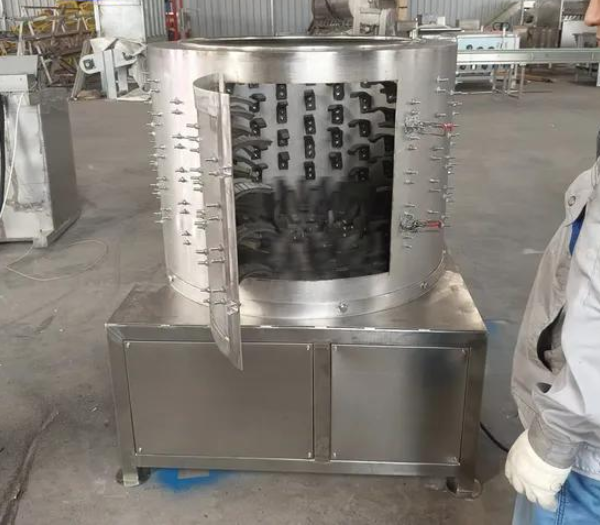
The Cattle Hoof Dehairing Machine is a professional automatic processing machine designed for removing hair from cattle and sheep hooves after slaughter.
In livestock slaughterhouses, cattle and sheep hooves are valuable by-products that require proper cleaning and preparation before further processing. After hoof scalding, the softened hair needs to be removed efficiently to obtain clean hoof products.
Traditional manual hoof cleaning requires intensive labor and produces inconsistent results. The automatic hoof dehairing machine uses a rotating drum structure and mechanical friction to remove remaining hoof hair quickly and evenly.
The machine is mainly used after:
Hoof Cutting → Hoof Scalding → Hoof Dehairing → Cleaning → Packaging
The equipment adopts a hygienic stainless steel design suitable for wet slaughterhouse environments.
Main components include:
Stainless steel frame base
Stainless steel cylindrical drum
Stainless steel rotary grid
Hot and cold water mixing valve
Bottom drainage system
Waterproof electric control box
According to EME QE-C209 specifications, the machine is designed for cattle and sheep slaughterhouses, with a stainless steel rotary structure and a processing capacity of approximately 360 cattle hooves/hour or 1440 sheep hooves/hour.
Structure and working principle
The cattle hoof dehairing machine works through mechanical rotation combined with water cleaning.
The operation process:
Scalded cattle or sheep hooves are loaded into the rotating drum.
The drum starts rotating at controlled speed.
Hooves move inside the drum and contact the internal rotary grid.
Mechanical friction removes loosened hair and impurities.
Hot and cold water continuously flushes the hooves.
Removed hair and wastewater are discharged through the drainage system.
Clean hooves are collected for further processing.
The combination of scalding and mechanical friction improves cleaning efficiency while reducing manual labor.
Source-listed construction and features
1. Automatic Rotary Dehairing System
The rotating drum replaces traditional manual scraping.
Applications and integration
The Cattle Hoof Dehairing Machine is widely used in:
Beef slaughterhouses
Sheep slaughterhouses
Goat processing plants
Halal meat processing facilities
Livestock by-product processing factories
Typical production process:
Animal Slaughter → Hoof Cutting → Hoof Scalding → Hoof Dehairing → Hoof Cleaning → Packaging
The equipment is installed in the by-product processing section.
It is suitable for factories processing:
Beef hoof products
Sheep feet products
Edible livestock by-products
Selection conditions and project fit
State species, incoming weight and temperature range, upstream scalding condition, required rate, discharge height, water or energy supply and by-product collection. Agree product quality criteria under the actual input conditions.
Evidence, configuration and document status
The descriptions and tables below are source-listed reference information, not independently measured results. Confirm material grade, electrical supply, dimensions, duty, guards, controls and delivery scope in the approved quotation and drawing. No model-specific certificate or verified customer installation is established by this page. Request the document issuer, applicable model, scope and revision before relying on a compliance claim.
Source and version
Reference compilation R1, 2026-11-16. Supplied document: 2. 去皮去内脏胴体修整设备.doc; section 2.14. Configuration rows retain source units. Where the source lists alternatives or several models, each row must be checked as a separate configuration; a capacity or dimension must not be transferred between models.
Installation and process interfaces
State the upstream scalding/preparation condition, animal or product range, required rate, discharge height, water or energy connections and collection of hair, feathers or other by-products.
Utilities, control and feedback requirements
Confirm the actual drive arrangement, adjustment range and control scope. Compare performance only under defined input and process conditions; reference rates are not an unconditional yield or quality commitment.
Maintenance and part identification
Request the configuration-specific manual and part references for fingers, rubber elements, scrapers, rollers and drive parts where fitted. Agree quantities and replenishment needs against actual duty and delivery experience. This page does not prescribe maintenance intervals, repairs or a guaranteed stock position.
Configuration-specific document checklist
Before purchase, identify the complete model and suffix, configuration table and drawing revision. Request the applicable layout/interface drawing, specification, manual, parts list and agreed inspection or test records. Performance curves or certificates should be linked only when an applicable original exists; a reference summary is not a substitute.
Source-unit confirmation required
The supplied reference does not explicitly state a unit for these fields: Water Temperature. The original entries are retained rather than assigning an assumed unit. Confirm the units, matching configuration and operating conditions before comparing these figures or approving a quotation.
Compare configurations for your project
For Cattle Hoof Dehairing Machine | Automatic Hoof Hair Removal Equipment for Slaughterhouse, keep the complete identifier the proposed complete model and configuration attached to its own source configuration. Compare process duty, incoming animal or product range, target output, utilities, installation envelope and upstream/downstream interfaces under the same project conditions. A higher catalogue rate alone does not establish a better fit.
Start with this page's listed reference fields: Model status: Product-family enquiry; no confirmed HUATAO model in this source; Reference provenance: Supplied database includes third-party EME / QE benchmark information. Confirm units, conditions and revision against the quoted configuration; do not transfer values to another model.
This record includes third-party benchmark information. It is not confirmation of HUATAO manufacture, supply rights, certified performance or an interchangeable HUATAO model.
Purchasing review and enquiry preparation
Start with Cattle Hoof Dehairing Machine | Automatic Hoof Hair Removal Equipment for Slaughterhouse and its specification/source notes. Download the linked reference summary, then request the original configuration-specific drawing and current technical documents. The summary is not an approved drawing, certificate or acceptance record.
Use the linked cattle & beef processing application and purchasing guidance to review process interfaces, selection conditions and the proposed supply boundary. Verify which manufacturer, supplier and installation responsibilities are included; a reference photo does not establish factory ownership, certification or a completed HUATAO installation.
Before enquiry, prepare animal species or incoming product, size/weight range, target throughput, operating shifts, destination, available utilities and a layout or interface drawing. Quote the proposed complete model and configuration and identify the missing documents or conditions you need checked. Use the enquiry on this page so the product and original source page are retained.
| Item | Specification |
|---|---|
| Product Name | Cattle Hoof Dehairing Machine |
| Application | Cattle and sheep hoof hair removal |
| Suitable Animals | Cattle, sheep, goat |
| Working Method | Rotary mechanical dehairing |
| Rated Voltage | 380V / 50Hz / 3 Phase |
| Power | 7.5 kW |
| Drum Diameter | 1.2 m |
| Water Temperature | 58–62℃ |
| Cattle Hoof Capacity | Approx. 360 pcs/hour |
| Sheep Hoof Capacity | Approx. 1440 pcs/hour |
| Frame Material | Stainless Steel |
| Drum Material | Stainless Steel |
| Internal Structure | Stainless Steel Circular Rotary Grid |
| Water System | Hot & Cold Water Mixing Valve |
| Drainage | Bottom Drain Hole |
| Control System | Stainless Steel Waterproof Electric Box |
Buyer FAQ
What is a hoof dehairing machine used for?
It is used to remove hair and impurities from cattle and sheep hooves after slaughter.
Does the machine work directly on fresh hooves?
Normally, hooves should be scalded first to soften the hair before dehairing.
What animals can be processed?
The machine is mainly used for cattle, sheep, and goat hooves.
What is the production capacity?
The standard machine can process approximately: 360 cattle hooves/hour 1440 sheep hooves/hour
What material is used?
The main structure is stainless steel, suitable for slaughterhouse hygiene requirements.
What equipment works together with this machine?
Recommended matching equipment: Hoof scalding tank Hoof sliding chute Hoof cutting machine By-product cleaning equipment
What information is needed to select this equipment?
State species, incoming weight and temperature range, upstream scalding condition, required rate, discharge height, water or energy supply and by-product collection. Agree product quality criteria under the actual input conditions.
Are these specifications an approved supply commitment?
No. These are source reference details. The quotation must identify the exact configuration, drawing revision, included documents and agreed acceptance criteria.
Related configurations and guidance
Reference specification and document status
This reference is not an approved manufacturing drawing, inspection report or certificate. Request the configuration-specific documents before purchase.