Band Splitting Saw Sterilizer
Band Splitting Saw Sterilizer. Compare product range, residence time and utility conditions; share your requirements for configuration review.
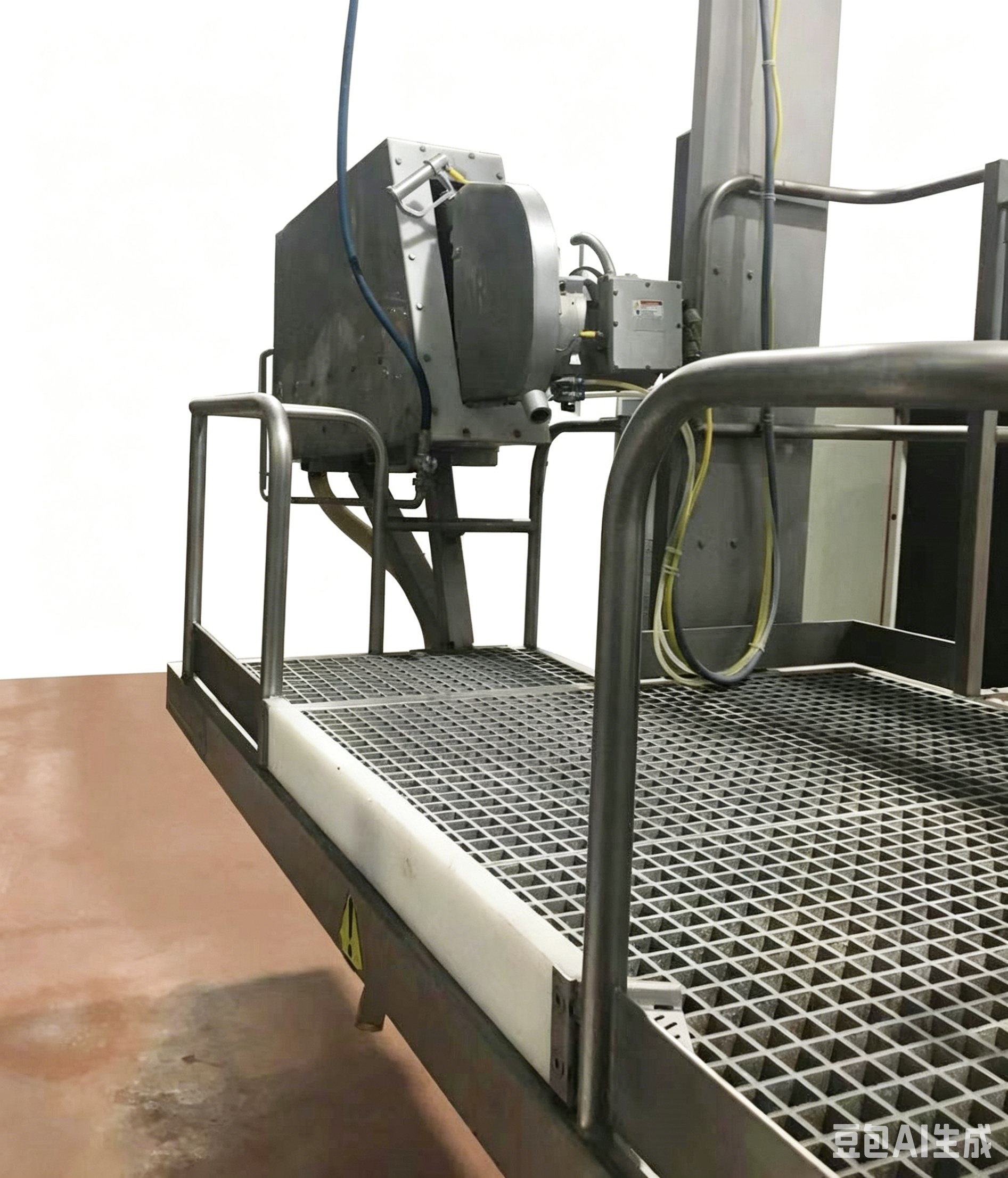
Specification notes
| Model status | Product family; exact model not identified in the supplied section |
|---|---|
| Material | Stainless Steel |
| Data status | Source reference R1; configuration requires written confirmation |
Use and process role
The Band Splitting Saw Sterilizer is a professional sanitation device designed for beef slaughterhouses and cattle processing plants.
During cattle carcass processing, the band splitting saw is used to split the carcass into two halves along the backbone. Since the saw blade continuously contacts bone, meat tissue, blood and body fluids, residues may remain on the blade surface after cutting.
Without effective sterilization, these residues may create a risk of:
bacterial growth
cross contamination
reduced food safety performance
The band splitting saw sterilizer provides a dedicated cleaning and disinfection station for the saw blade.
The equipment uses stainless steel construction and hot water sterilization technology to clean the saw blade after operation, ensuring the cutting tool remains hygienic during continuous production.
It is normally installed together with:
cattle carcass band splitting saw
carcass splitting platform
carcass conveyor system
carcass processing line
The compact structure allows easy integration into existing beef slaughterhouse layouts.
Structure and working principle
The Band Splitting Saw Sterilizer works by using a sterilizing chamber to clean and disinfect the saw blade.
After the band saw completes a carcass splitting operation, the blade passes through the sterilizing unit.
Inside the chamber:
Hot water or sterilizing liquid contacts the saw blade surface.
Meat residues, blood and particles are removed.
High temperature treatment reduces bacteria on the blade.
The cleaned blade returns to the next cutting cycle.
The continuous sterilization process helps maintain hygiene standards during high-volume beef processing.
Source-listed construction and features
1. Continuous Saw Blade Sterilization
The equipment allows the band saw blade to be cleaned during production without interrupting the processing workflow.
2. Improves Meat Safety
Regular sterilization reduces the possibility of:
bacterial transfer
carcass contamination
hygiene problems
during carcass splitting.
3. Stainless Steel Food Grade Structure
The machine is manufactured with stainless steel materials suitable for slaughterhouse environments.
Applications and integration
The Band Splitting Saw Sterilizer is widely used in:
1. Beef Slaughterhouses
Installed after the carcass splitting station to maintain cutting tool hygiene.
Typical process:
Slaughter → Dressing → Splitting → Sterilization → Chilling
2. Meat Processing Plants
Suitable for facilities producing:
fresh beef
chilled beef
frozen beef
export beef products
3. Automated Cattle Processing Lines
The sterilizer can be integrated with:
carcass splitting saw
carcass conveyor rail
carcass weighing system
chilling conveyor system
Selection conditions and project fit
Define product size, residence time, line speed, water quality, temperature, pressure, flow and drainage. Specify the hygiene process and acceptance method; a machine name does not establish a validated hygiene result.
Evidence, configuration and document status
The descriptions and tables below are source-listed reference information, not independently measured results. Confirm material grade, electrical supply, dimensions, duty, guards, controls and delivery scope in the approved quotation and drawing. No model-specific certificate or verified customer installation is established by this page. Request the document issuer, applicable model, scope and revision before relying on a compliance claim.
Source and version
Reference compilation R1, 2026-11-16. Supplied document: 3. 冷却与切割设备.doc; section 3.8. Configuration rows retain source units. Where the source lists alternatives or several models, each row must be checked as a separate configuration; a capacity or dimension must not be transferred between models.
Installation and process interfaces
State incoming product condition, process residence time, line speed, working height, water connections, drain location and access for cleaning or component removal. Check the full installation envelope, not only catalogue dimensions.
Utilities, control and feedback requirements
Use only the power, water, heating or cooling values given for the matching source configuration. Confirm operating pressure/flow or temperature, control method and line signals. A reference machine does not establish a validated hygiene or cooling result.
Maintenance and part identification
Request the configuration-specific manual and part references for nozzles, seals, pumps, sensors, conveying elements and any heating/cooling components fitted. Agree quantities and replenishment needs against actual duty and delivery experience. This page does not prescribe maintenance intervals, repairs or a guaranteed stock position.
Configuration-specific document checklist
Before purchase, identify the complete model and suffix, configuration table and drawing revision. Request the applicable layout/interface drawing, specification, manual, parts list and agreed inspection or test records. Performance curves or certificates should be linked only when an applicable original exists; a reference summary is not a substitute.
Compare configurations for your project
For Band Splitting Saw Sterilizer, keep the complete identifier the proposed complete model and configuration attached to its own source configuration. Compare process duty, incoming animal or product range, target output, utilities, installation envelope and upstream/downstream interfaces under the same project conditions. A higher catalogue rate alone does not establish a better fit.
Start with this page's listed reference fields: Model status: Product family; exact model not identified in the supplied section; Material: Stainless Steel. Confirm units, conditions and revision against the quoted configuration; do not transfer values to another model.
Compare alternative quotations only after each supplier identifies the complete model, configuration and matching documents. No universal suffix meaning or unsupported advantage over another model is asserted.
Purchasing review and enquiry preparation
Start with Band Splitting Saw Sterilizer and its specification/source notes. Download the linked reference summary, then request the original configuration-specific drawing and current technical documents. The summary is not an approved drawing, certificate or acceptance record.
Use the linked cattle & beef processing application and purchasing guidance to review process interfaces, selection conditions and the proposed supply boundary. Verify which manufacturer, supplier and installation responsibilities are included; a reference photo does not establish factory ownership, certification or a completed HUATAO installation.
Before enquiry, prepare animal species or incoming product, size/weight range, target throughput, operating shifts, destination, available utilities and a layout or interface drawing. Quote the proposed complete model and configuration and identify the missing documents or conditions you need checked. Use the enquiry on this page so the product and original source page are retained.
| Item | Specification |
|---|---|
| Product Name | Band Splitting Saw Sterilizer |
| Application | Cattle carcass band saw cleaning and sterilization |
| Compatible Equipment | Beef carcass splitting band saw |
| Material | Stainless Steel |
| Sterilization Method | Hot water / sterilizing water |
| Installation Position | Near carcass splitting station |
| Structure Type | Closed sterilizing chamber |
| Operation Mode | Continuous sterilization |
| Suitable Industry | Beef slaughterhouse / meat processing plant |
Buyer FAQ
1. What is a band splitting saw sterilizer used for?
It is used to clean and disinfect band saw blades used for cattle carcass splitting.
2. Why does a carcass splitting saw need sterilization?
Because the blade contacts meat, bone and blood directly, regular sterilization helps reduce cross contamination.
3. What sterilizing method is used?
Most systems use hot water or approved sterilizing solutions for blade sanitation.
What information is needed to select this equipment?
Define product size, residence time, line speed, water quality, temperature, pressure, flow and drainage. Specify the hygiene process and acceptance method; a machine name does not establish a validated hygiene result.
Are these specifications an approved supply commitment?
No. These are source reference details. The quotation must identify the exact configuration, drawing revision, included documents and agreed acceptance criteria.
Related configurations and guidance
Reference specification and document status
Download cattle-3-8-band-splitting-saw-sterilizer reference specification and verification checklist
This reference is not an approved manufacturing drawing, inspection report or certificate. Request the configuration-specific documents before purchase.