Horizontal Sheep and Goat Carcass Dehairing Machine | HT-C211-I
Horizontal Sheep and Goat Carcass Dehairing Machine. Compare incoming condition, product range and processing duty; share your requirements for configuration review.
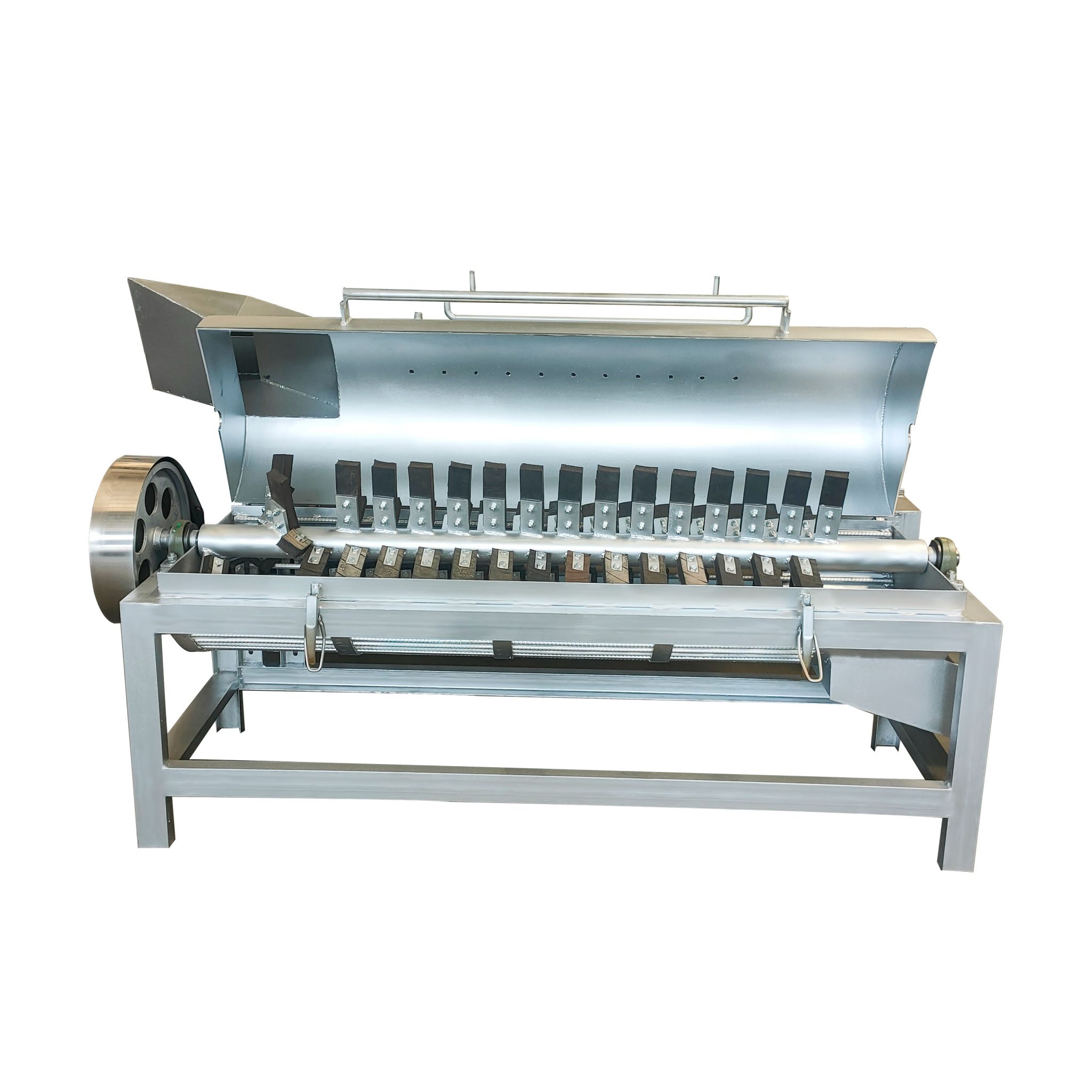
Specification notes
| Model | HT-C211-I |
|---|---|
| Installed power | 7.5 kW |
| Overall dimensions | 1,700 × 1,580 × 1,200 mm |
| Capacity | Source conflict: 20–30 head/hour and maximum 100 head/hour |
| Data status | Source reference R1; configuration requires written confirmation |
Use and process role
The Horizontal Sheep and Goat Carcass Dehairing Machine is designed for whole-carcass hair removal after scalding. A horizontal rotating shaft carries rubber working bars that contact and turn the carcass inside the chamber. The arrangHTnt is aimed at processors producing skin-on sheep or goat carcasses rather than removing the hide in a conventional dressing line.
The reference machine uses a 7.5 kW drive and has an effective working length of 1,800 mm. Its listed cycle time is 30–40 seconds and the stated dehairing rate is at least 92%. The source gives two inconsistent throughput figures—20–30 head per hour and a maximum of 100 head per hour. Buyers should not use either figure for line design until the supplier explains the batch size and test conditions.
Structure and working principle
A properly scalded carcass is placed in the horizontal chamber and the loading guard is secured. The motor rotates the central shaft and rubber bars sweep against the carcass, turning it so that friction reaches different surfaces. Loosened hair falls through or is flushed toward the collection area. After the preset 30–40 second cycle, the shaft stops and the carcass is discharged for visual inspection and manual finishing. The chamber, shaft and bars are opened for thorough cleaning after production.
Source-listed construction and features
Horizontal batch format for whole sheep or goat carcasses
Rubber working bars mounted on a powered central shaft
30–40 second reference dehairing cycle
Stated dehairing result of at least 92%
Galvanized or stainless frame and shaft options
Selection conditions and project fit
State species, incoming weight and temperature range, upstream scalding condition, required rate, discharge height, water or energy supply and by-product collection. Agree product quality criteria under the actual input conditions.
Evidence, configuration and document status
The descriptions and tables below are source-listed reference information, not independently measured results. Confirm material grade, electrical supply, dimensions, duty, guards, controls and delivery scope in the approved quotation and drawing. No model-specific certificate or verified customer installation is established by this page. Request the document issuer, applicable model, scope and revision before relying on a compliance claim.
Source and version
Reference compilation R1, 2026-11-16. Supplied document: 2. 羊剥皮 内脏处理 称重 清洗设备.doc; section 2.12. Configuration rows retain source units. Where the source lists alternatives or several models, each row must be checked as a separate configuration; a capacity or dimension must not be transferred between models.
Installation and process interfaces
State the upstream scalding/preparation condition, animal or product range, required rate, discharge height, water or energy connections and collection of hair, feathers or other by-products.
Utilities, control and feedback requirements
Confirm the actual drive arrangement, adjustment range and control scope. Compare performance only under defined input and process conditions; reference rates are not an unconditional yield or quality commitment.
Maintenance and part identification
Request the configuration-specific manual and part references for fingers, rubber elements, scrapers, rollers and drive parts where fitted. Agree quantities and replenishment needs against actual duty and delivery experience. This page does not prescribe maintenance intervals, repairs or a guaranteed stock position.
Configuration-specific document checklist
Before purchase, identify the complete model and suffix, configuration table and drawing revision. Request the applicable layout/interface drawing, specification, manual, parts list and agreed inspection or test records. Performance curves or certificates should be linked only when an applicable original exists; a reference summary is not a substitute.
Compare configurations for your project
For Horizontal Sheep and Goat Carcass Dehairing Machine | HT-C211-I, keep the complete identifier HT-C211-I attached to its own source configuration. Compare process duty, incoming animal or product range, target output, utilities, installation envelope and upstream/downstream interfaces under the same project conditions. A higher catalogue rate alone does not establish a better fit.
Start with this page's listed reference fields: Installed power: 7.5 kW; Overall dimensions: 1,700 × 1,580 × 1,200 mm; Capacity: Source conflict: 20–30 head/hour and maximum 100 head/hour. Confirm units, conditions and revision against the quoted configuration; do not transfer values to another model.
Compare alternative quotations only after each supplier identifies the complete model, configuration and matching documents. No universal suffix meaning or unsupported advantage over another model is asserted.
Purchasing review and enquiry preparation
Start with Horizontal Sheep and Goat Carcass Dehairing Machine | HT-C211-I and its specification/source notes. Download the linked reference summary, then request the original configuration-specific drawing and current technical documents. The summary is not an approved drawing, certificate or acceptance record.
Use the linked sheep & goat processing application and purchasing guidance to review process interfaces, selection conditions and the proposed supply boundary. Verify which manufacturer, supplier and installation responsibilities are included; a reference photo does not establish factory ownership, certification or a completed HUATAO installation.
Before enquiry, prepare animal species or incoming product, size/weight range, target throughput, operating shifts, destination, available utilities and a layout or interface drawing. Quote HT-C211-I and identify the missing documents or conditions you need checked. Use the enquiry on this page so the product and original source page are retained.
| PARAMETER | REFERENCE SPECIFICATION |
|---|---|
| Reference model | HT-C211-I |
| Electrical supply | 380 V / 50 Hz / 3 phase |
| Installed power | 7.5 kW |
| Overall dimensions | 1,700 × 1,580 × 1,200 mm |
| Effective dehairing length | 1,800 mm — verify against stated overall length |
| Cycle time | 30–40 seconds |
| Stated dehairing rate | ≥92% |
| Capacity | Source conflict: 20–30 head/hour and maximum 100 head/hour |
| Frame and shaft | Galvanized steel or stainless steel |
| Working elHTnts | Rubber bars |
Buyer FAQ
Why are two capacity figures shown?
Both appear in the source page and are inconsistent. Ask the supplier for tested head-per-cycle, loading time and hourly output before sizing the line.
Does the machine work on an unscalded carcass?
No. Hair must first be loosened by a controlled scalding process.
Will 92% dehairing eliminate manual finishing?
Not necessarily. The stated rate still leaves residual hair, and actual finish varies with scalding and carcass condition.
Can it be used in a normal hide-removal line?
It serves a different process. Conventional skinned carcasses use a hide puller rather than whole-carcass dehairing.
Which parts wear most quickly?
Rubber bars, their fasteners, bearings, seals, guards and drive components require routine inspection. Keep a matched set of working bars in stock.
What information is needed to select this equipment?
State species, incoming weight and temperature range, upstream scalding condition, required rate, discharge height, water or energy supply and by-product collection. Agree product quality criteria under the actual input conditions.
Are these specifications an approved supply commitment?
No. These are source reference details. The quotation must identify the exact configuration, drawing revision, included documents and agreed acceptance criteria.
Related configurations and guidance
Reference specification and document status
Download HT-C211-I reference specification and verification checklist
This reference is not an approved manufacturing drawing, inspection report or certificate. Request the configuration-specific documents before purchase.