Hydraulic Sheep Skin Puller | HT-S207-II
Hydraulic Sheep Skin Puller. Compare input range, required output and working interfaces; share your requirements for configuration review.
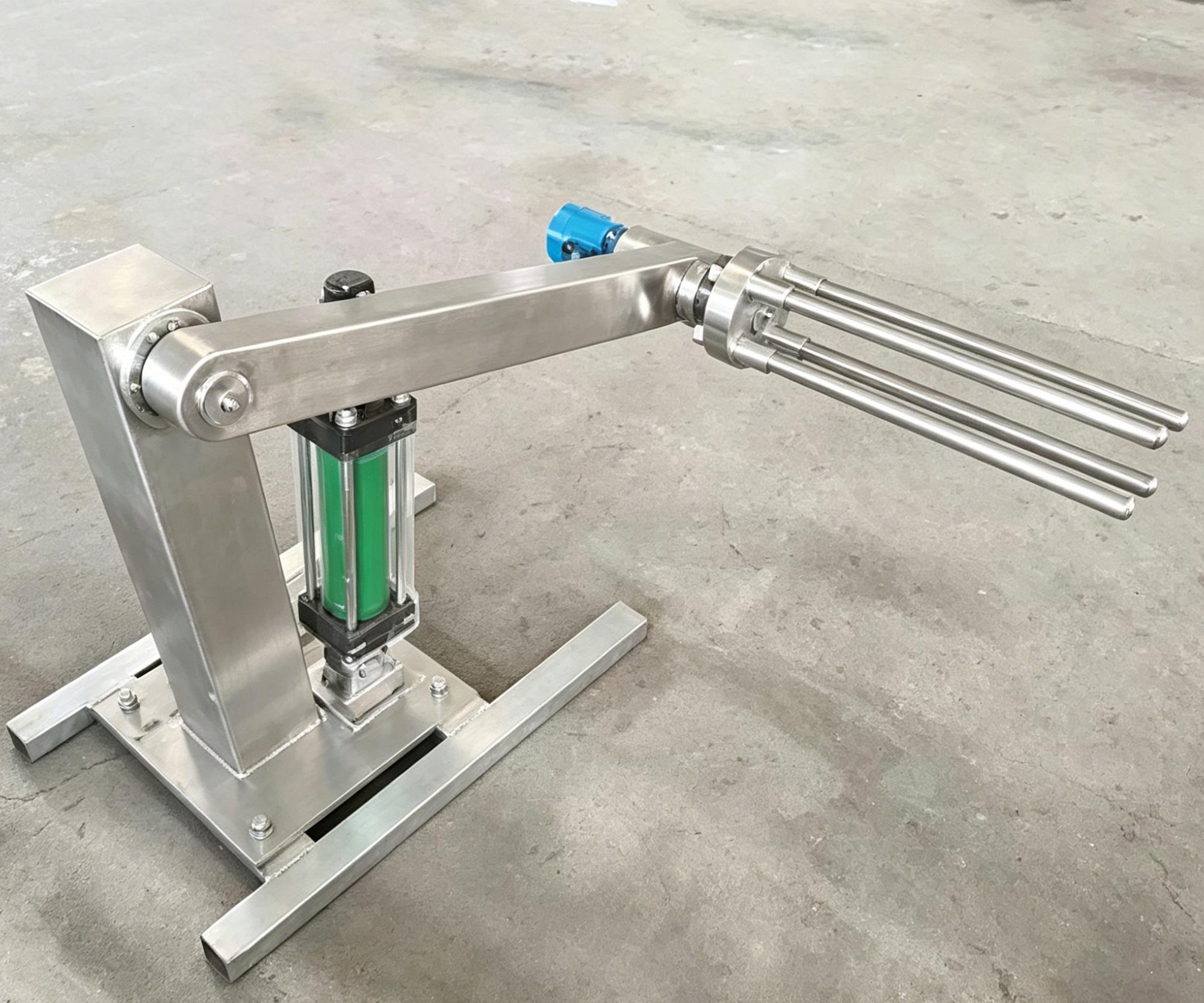
Supplied product-directory reference image: equipment family or process context. It is not proof of an exact model, HUATAO installation or certification. Confirm the proposed configuration photograph and drawing before ordering.
Specification notes
| Model | HT-S207-II |
|---|---|
| Installed power | 5.5 kW |
| Maximum stated capacity | 200 sheep/hour |
| Stroke / overall dimensions | Not stated; confirm against rail layout |
| Data status | Source reference R1; configuration requires written confirmation |
Use and process role
Heavy wool, mature animals and uneven opening cuts can make one carcass pull quite differently from the next. This hydraulic sheep hide puller gives the dressing crew a powered, adjustable pull at the dehiding station. The operator still prepares the legs and follows the separation with a knife; the machine takes over the sustained load. It is a practical option when compressed-air pullers do not deliver the force margin the plant wants.
The source configuration pairs a 5.5 kW power unit with a 6 MPa circuit. Parts exposed at the station—the support and winding roller—are specified in stainless steel. Hoses, controls and low-pressure switches form part of the described hydraulic package. HT lists a ceiling of 200 animals per hour, but that is a line figure, not a promise for every flock. Wool, fat cover, carcass size, rail pitch and the quality of the opening cuts all change the real cycle.
Structure and working principle
Before the pull, crew members open the legs and free a usable flap of hide. They fasten that flap to the roller or pulling chain, check that the carcass is centred, and start the cycle. Oil from the power unit moves the actuator, drawing the hide away while the carcass stays on the overhead rail. Difficult spots can be trimmed without fighting the full weight of the hide. Once separation is complete, the operator drops the hide onto the collection conveyor, returns the mechanism and checks the attachment point for the next carcass.
Source-listed construction and features
Hydraulic drive for controlled pulling force
Reference 6 MPa working pressure and 5.5 kW power pack
Stainless support and pulling roller
Low-pressure switches for hydraulic circuit monitoring
Hoses and control equipment included in the stated configuration
Maximum listed rate of 200 sheep per hour
Selection conditions and project fit
State incoming product size and temperature, target cut or separation, rate, output specification, interfaces, blade or tool arrangement and guarding requirements. Agree a representative-product trial and the acceptance criteria.
Evidence, configuration and document status
The descriptions and tables below are source-listed reference information, not independently measured results. Confirm material grade, electrical supply, dimensions, duty, guards, controls and delivery scope in the approved quotation and drawing. No model-specific certificate or verified customer installation is established by this page. Request the document issuer, applicable model, scope and revision before relying on a compliance claim.
Source and version
Reference compilation R1, 2026-11-16. Supplied document: 2. 羊剥皮 内脏处理 称重 清洗设备.doc; section 2.8. Configuration rows retain source units. Where the source lists alternatives or several models, each row must be checked as a separate configuration; a capacity or dimension must not be transferred between models.
Installation and process interfaces
Provide product size and condition, target cut or separation, feed/discharge direction, support height and space for tool replacement and maintenance. Confirm the proposed guards, operator access and connection to the receiving station.
Utilities, control and feedback requirements
Check the model-specific drive and electrical or fluid-power supply. Agree start/stop, upstream/downstream interlocks and feedback requirements where relevant. Do not infer a control protocol or tool capability from a family photograph.
Maintenance and part identification
Request the configuration-specific manual and part references for matched blades or tools, drive components, seals and position sensors where fitted. Agree quantities and replenishment needs against actual duty and delivery experience. This page does not prescribe maintenance intervals, repairs or a guaranteed stock position.
Configuration-specific document checklist
Before purchase, identify the complete model and suffix, configuration table and drawing revision. Request the applicable layout/interface drawing, specification, manual, parts list and agreed inspection or test records. Performance curves or certificates should be linked only when an applicable original exists; a reference summary is not a substitute.
Compare configurations for your project
For Hydraulic Sheep Skin Puller | HT-S207-II, keep the complete identifier HT-S207-II attached to its own source configuration. Compare process duty, incoming animal or product range, target output, utilities, installation envelope and upstream/downstream interfaces under the same project conditions. A higher catalogue rate alone does not establish a better fit.
Start with this page's listed reference fields: Installed power: 5.5 kW; Maximum stated capacity: 200 sheep/hour; Stroke / overall dimensions: Not stated; confirm against rail layout. Confirm units, conditions and revision against the quoted configuration; do not transfer values to another model.
Compare alternative quotations only after each supplier identifies the complete model, configuration and matching documents. No universal suffix meaning or unsupported advantage over another model is asserted.
Purchasing review and enquiry preparation
Start with Hydraulic Sheep Skin Puller | HT-S207-II and its specification/source notes. Download the linked reference summary, then request the original configuration-specific drawing and current technical documents. The summary is not an approved drawing, certificate or acceptance record.
Use the linked sheep & goat processing application and purchasing guidance to review process interfaces, selection conditions and the proposed supply boundary. Verify which manufacturer, supplier and installation responsibilities are included; a reference photo does not establish factory ownership, certification or a completed HUATAO installation.
Before enquiry, prepare animal species or incoming product, size/weight range, target throughput, operating shifts, destination, available utilities and a layout or interface drawing. Quote HT-S207-II and identify the missing documents or conditions you need checked. Use the enquiry on this page so the product and original source page are retained.
| PARAMETER | REFERENCE SPECIFICATION |
|---|---|
| Reference model | HT-S207-II |
| Electrical supply | 380 V / 50 Hz / 3 phase |
| Installed power | 5.5 kW |
| Hydraulic working pressure | 6 MPa |
| Maximum stated capacity | 200 sheep/hour |
| Pulling support | 304 stainless steel |
| Pulling roller | 304 stainless steel |
| Hydraulic package | Power station, hoses and controls |
| Pressure monitoring | Low-pressure switches |
| Stroke / overall dimensions | Not stated; confirm against rail layout |
Buyer FAQ
When is hydraulic operation preferable to pneumatic operation?
Hydraulics are useful when higher force and controlled movHTnt are priorities. Pneumatic systems may be simpler where suitable plant air is already available.
What hydraulic oil should be used?
Use only the grade approved by the supplier and manage leakage risk in line with the plant's food-safety procedure.
Which hydraulic spares are recommended?
Keep seal kits, filter elHTnts, pressure switches, approved hoses, fittings, valve coils and the specified hydraulic fluid.
Is the 200-per-hour rate suitable for every carcass mix?
No. It is a maximum reference figure. Heavy wool, poor pre-skinning and frequent trimming will reduce output.
What information is needed to select this equipment?
State incoming product size and temperature, target cut or separation, rate, output specification, interfaces, blade or tool arrangement and guarding requirements. Agree a representative-product trial and the acceptance criteria.
Are these specifications an approved supply commitment?
No. These are source reference details. The quotation must identify the exact configuration, drawing revision, included documents and agreed acceptance criteria.
Related configurations and guidance
Reference specification and document status
Download HT-S207-II reference specification and verification checklist
This reference is not an approved manufacturing drawing, inspection report or certificate. Request the configuration-specific documents before purchase.