 SlaughterPro | HUATAO
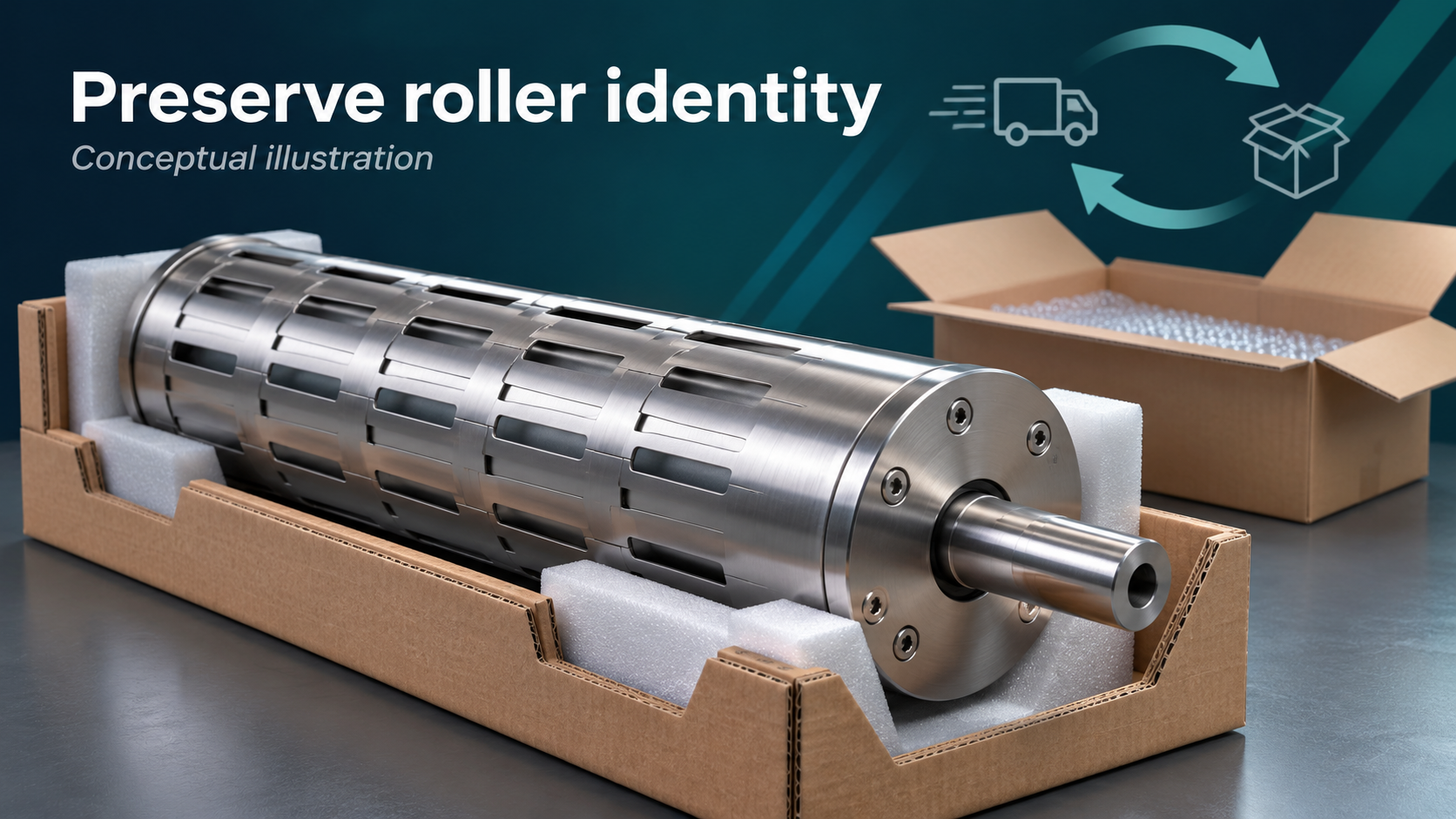
What does the supplier example establish?
DeLong's describes roller-repair services and notes that not every roller can be repaired. That is its service offering, not a HUATAO capability or a remaining-life guarantee. DeLong's roller-repair overview
Ask the proposed provider to identify which item it will assess and whether the first step is an inspection or a committed repair. Keep any conditional quotation separate from work already agreed. Do not use a before-and-after photograph to infer the condition of another component.
How should dispatch identity be recorded?
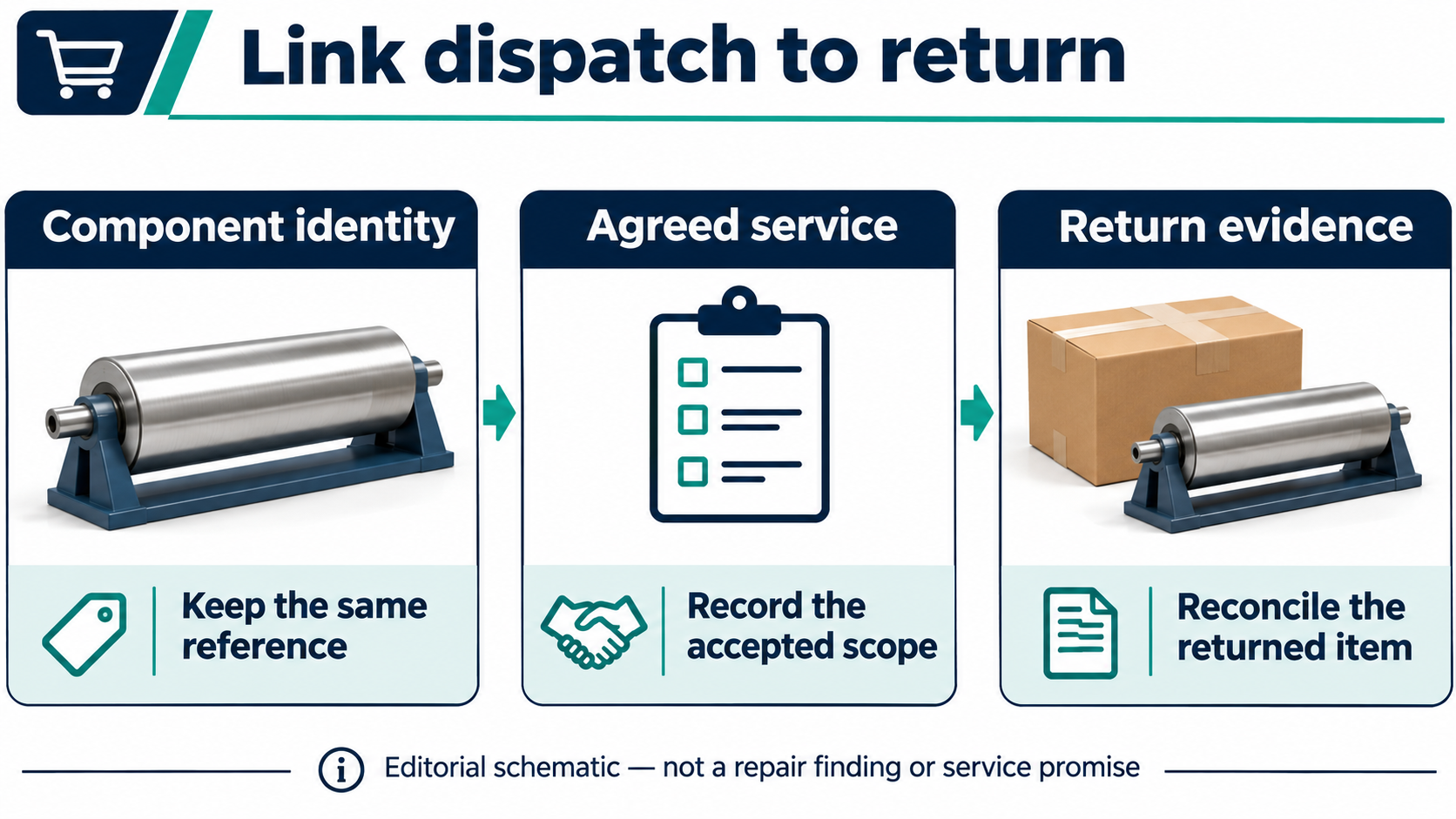
Record the equipment association, complete component reference and permitted identification method with the responsible team. Attach relevant condition observations and the documentation needed by the service provider. Ask how that identity will remain traceable during the service process.
Clarify whether the returned item will be the original component, an exchange item or another proposed replacement. Those are different purchasing outcomes even when the quotation uses a broad refurbishment description.
What should return acceptance establish?
Agree what work record, dimensional or other evidence the responsible reviewer requires. Record any changes and unconfirmed suitability before returning the component to service. The necessary assessment must be defined for the actual equipment by qualified personnel.
No repair technique, service-life multiplier, cost saving or HUATAO service commitment is supplied here. This guide concerns component custody and documented service scope, not a repair procedure.
Buyer's next step: Use a dispatch-to-return record identifying the component, proposed service, exchange restrictions, approval owner and evidence needed to close the service order.
| Field | Buyer question |
|---|---|
| Component identity | Keep a traceable reference from dispatch to return, linked to the actual machine. |
| Agreed service | Record accepted scope and distinguish assessment from a committed repair. |
| Return evidence | Reconcile the returned item: original component, exchange or replacement. Qualified reviewers define acceptance evidence before return to service. |