 SlaughterPro | HUATAO
Treat evidence from a precommercial trial as evidence about the tested development stage, not as a ready-made commercial commitment. Before purchasing, ask which functions are available now, what still depends on development and who carries responsibility if those milestones are not achieved.
What does precommercial evidence establish?
MLA's off-farm overview describes a precommercial beef middle system separately from commercial lamb cutting modules. That distinction matters when interpreting technology readiness. The status described belongs to that programme, not to every beef automation proposal. MLA off-farm productivity overview
This article does not repeat programme return estimates or claim that HUATAO supplies its robotics, vision or AI systems. The page is background reviewed on 23 November 2026, not new market news.
Which development dependencies should the buyer expose?
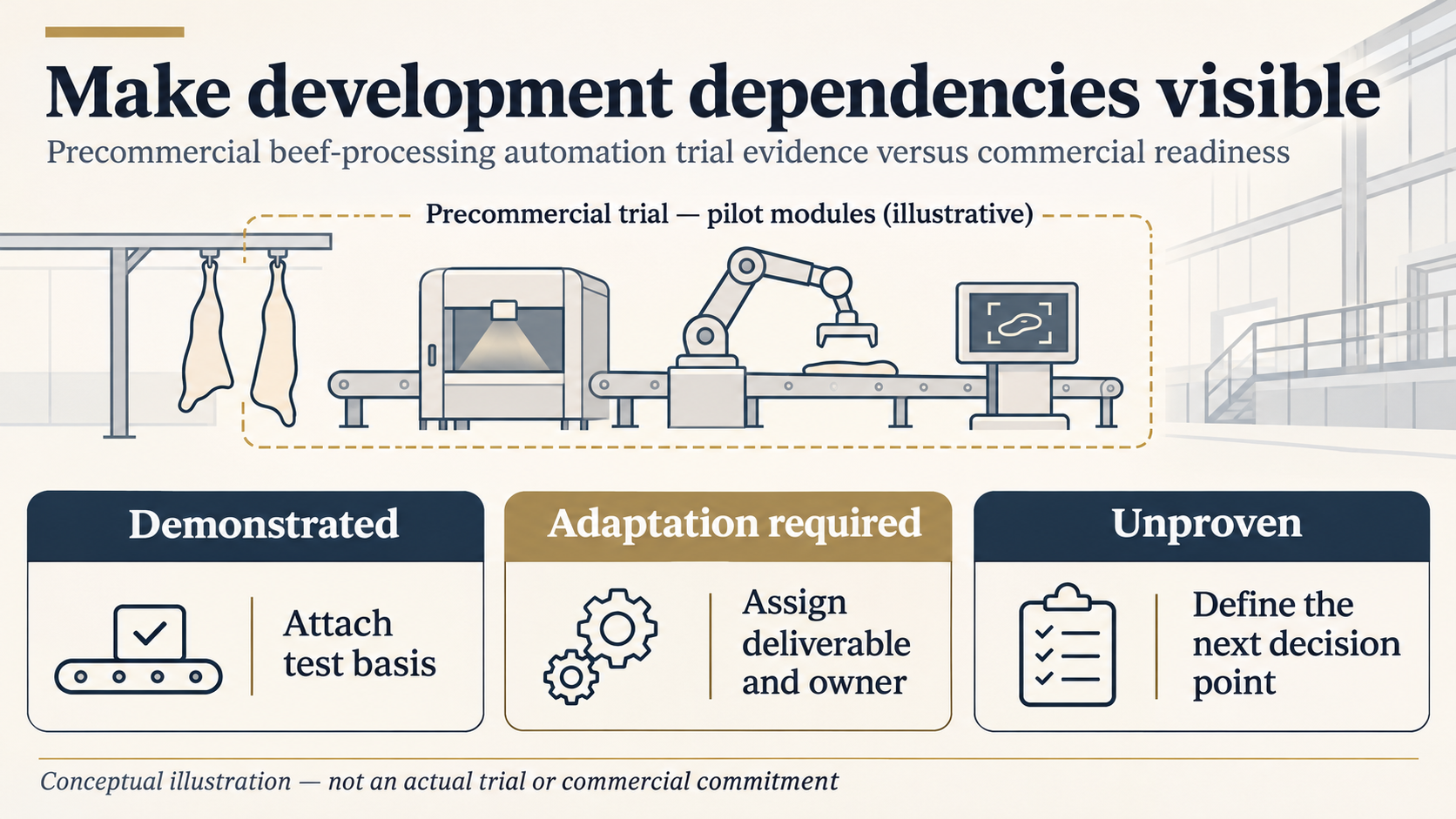
Ask the supplier to distinguish demonstrated functions, proposed adaptations and development work still outstanding. Record the configuration and site behind each piece of evidence. Identify the deliverable and decision point that would close each remaining development dependency.
Keep commercial availability separate from a successful demonstration. The buyer still needs to understand the proposed supply entity, service responsibility, documentation and implementation scope. A programme milestone does not answer those questions for another installation.
How should staged commitments be assessed?
Have the responsible project and commercial teams define the evidence needed before progressing between feasibility review, project-specific validation and equipment acceptance. Ask how changes to the development schedule or demonstrated scope will be reported and resolved.
The aim is to make readiness visible, not to assign a universal maturity score. This guide specifies no contract clause, guaranteed result or investment return. Installation-specific engineering and commercial review remain necessary.
Buyer's next step: Build a readiness register with three statuses—demonstrated, project adaptation required and unproven—and attach evidence, an owner and a decision point to every function affecting the purchase.
| Status | Buyer action |
|---|---|
| Demonstrated | Attach test basis |
| Adaptation required | Assign deliverable and owner |
| Unproven | Define next decision point |