 SlaughterPro | HUATAO
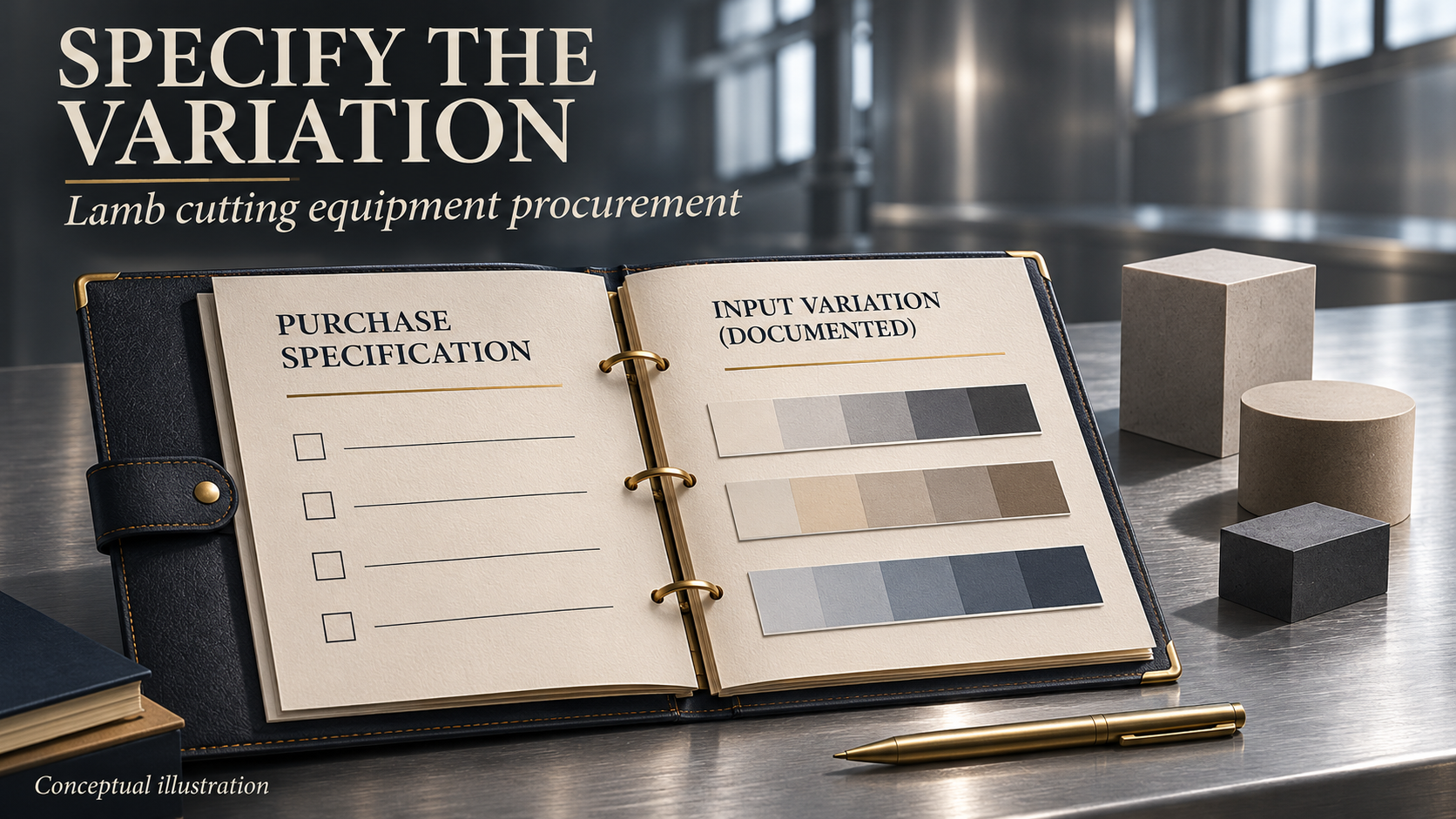
Before comparing lamb cutting equipment, describe the incoming carcases, required cuts and evidence needed to accept the result. An average weight and a headline throughput do not tell suppliers how much the material varies or what counts as an acceptable finished product. Give each supplier the same input profile and cut specification before evaluating its proposed solution.
Which incoming differences should the buyer record?
Record the weight distribution and relevant dimensions of the actual incoming material, together with its presentation, condition and upstream preparation. Ask the supplier which measurements its proposed configuration needs and how those measurements will be taken. Keep observed production data separate from assumptions about future supply.
Meat & Livestock Australia identifies variable carcase weights as a challenge for processing and associated operations. Its off-farm overview also distinguishes different lamb cutting modules, illustrating why “cutting automation” should be broken into specific tasks. These are industry-programme observations, not evidence of HUATAO equipment capability. MLA off-farm productivity overview
The page was reviewed on 20 November 2026; this article does not treat it as newly published news. The following procurement checklist is editorial guidance, not a cutting procedure.
Avoid sending only a convenient average. Explain the mix normally received, how often less common sizes occur and which inputs the plant intends to exclude. Do not invent a range to complete an enquiry: mark missing measurements for collection and ask the supplier to identify the resulting selection uncertainty.
Which finished cuts define the equipment scope?
State what enters the proposed machine and what must leave it. A whole-carcase breakdown task is different from processing an already separated section. Identify the required products, presentation and downstream handover, including how trim, bone and other outputs will be handled within the proposed scope.
Attach buyer-approved product descriptions, photographs or drawings where available and authorised. Ask the supplier to mark any output it cannot yet confirm. A familiar cut name may be interpreted differently between markets, so retain a visual or documented definition rather than relying on terminology alone.
Separate the required outcome from the technology proposed to achieve it. A basic cutting machine, a dedicated module and an automated system should not be assumed to have equivalent functions. This guide makes no claim that HUATAO supplies MLA's referenced systems, robotics, vision equipment or automated cut selection.
What should a representative equipment trial demonstrate?
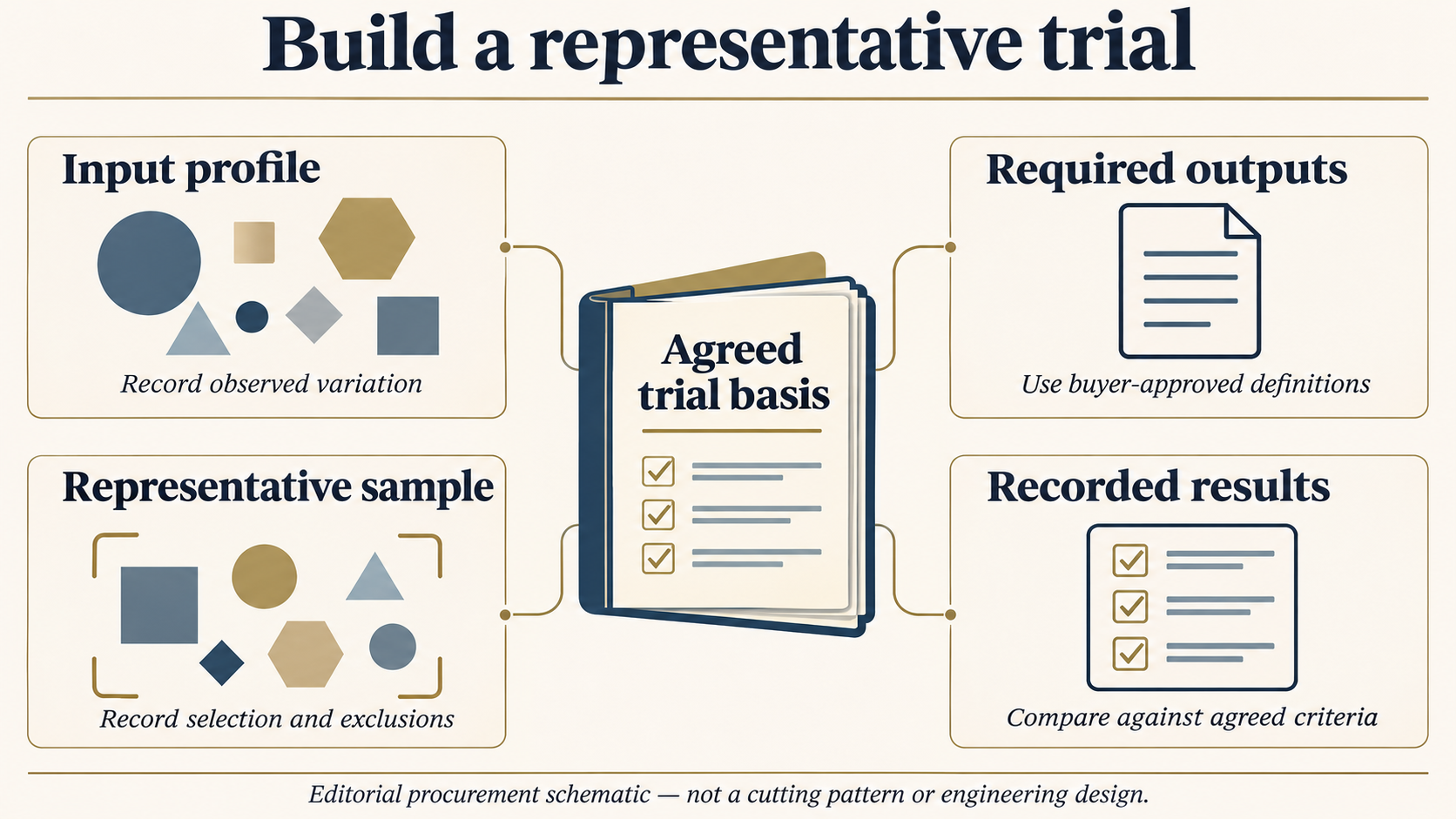
Agree the sample selection before a trial. The sample should reflect the input variation relevant to the purchase, with any excluded material recorded. A demonstration on a narrowly selected set cannot by itself establish performance across the plant's intended input profile.
Document the machine configuration, incoming material condition, product definitions, operating circumstances and measurement method. Have the responsible specialists agree safe trial arrangements; this article supplies no machine settings or safety-operation instructions.
Use the representative equipment trial evidence checklist below to record these four questions and their supporting evidence.
Agree acceptance criteria before collecting results. Where yield or accuracy is proposed as a purchasing measure, define the calculation, exclusions and reference basis. Published results from another installation or technology programme do not establish the performance of the equipment being quoted.
How should the quotation handle unverified conditions?
Ask the supplier to distinguish confirmed scope from trial-dependent proposals. Link each performance statement to the specified material, configuration and test basis. Record what happens when inputs fall outside that basis, and who must resolve open items before order acceptance.
The sheep and goat equipment catalogue provides category context. A listed cutting product still needs model-specific review; the category does not establish suitability for a particular lamb cut plan or an automated application. Do not assume that suitability for lamb establishes suitability for goat or other material.
Buyer's next step: Prepare one enquiry attachment containing the measured input profile, required output definitions and proposed trial evidence. Ask each supplier to identify its applicable configuration, exclusions and remaining validation work against that same attachment.
| Trial question | Evidence to request |
|---|---|
| Was the sample relevant? | Recorded input characteristics and the basis for selecting samples |
| Were the products acceptable? | Results against buyer-approved product definitions and agreed criteria |
| What required further work? | Documented rework, rejected output and unresolved observations |
| Can proposals be compared? | The same scope and measurement basis, with deviations identified |
| Basis | Buyer action |
|---|---|
| Input profile | Record observed variation |
| Required outputs | Use buyer-approved definitions |
| Representative sample | Record selection and exclusions |
| Recorded results | Compare against agreed criteria |
Questions before you decide
Can two proposals be compared using nominal throughput alone?
Only a throughput figure with matching input, output and operating conditions can support a meaningful comparison. Check what material was used, which tasks were included and whether acceptable output or total processed input was measured. Resolve differences before ranking proposals.