 SlaughterPro | HUATAO
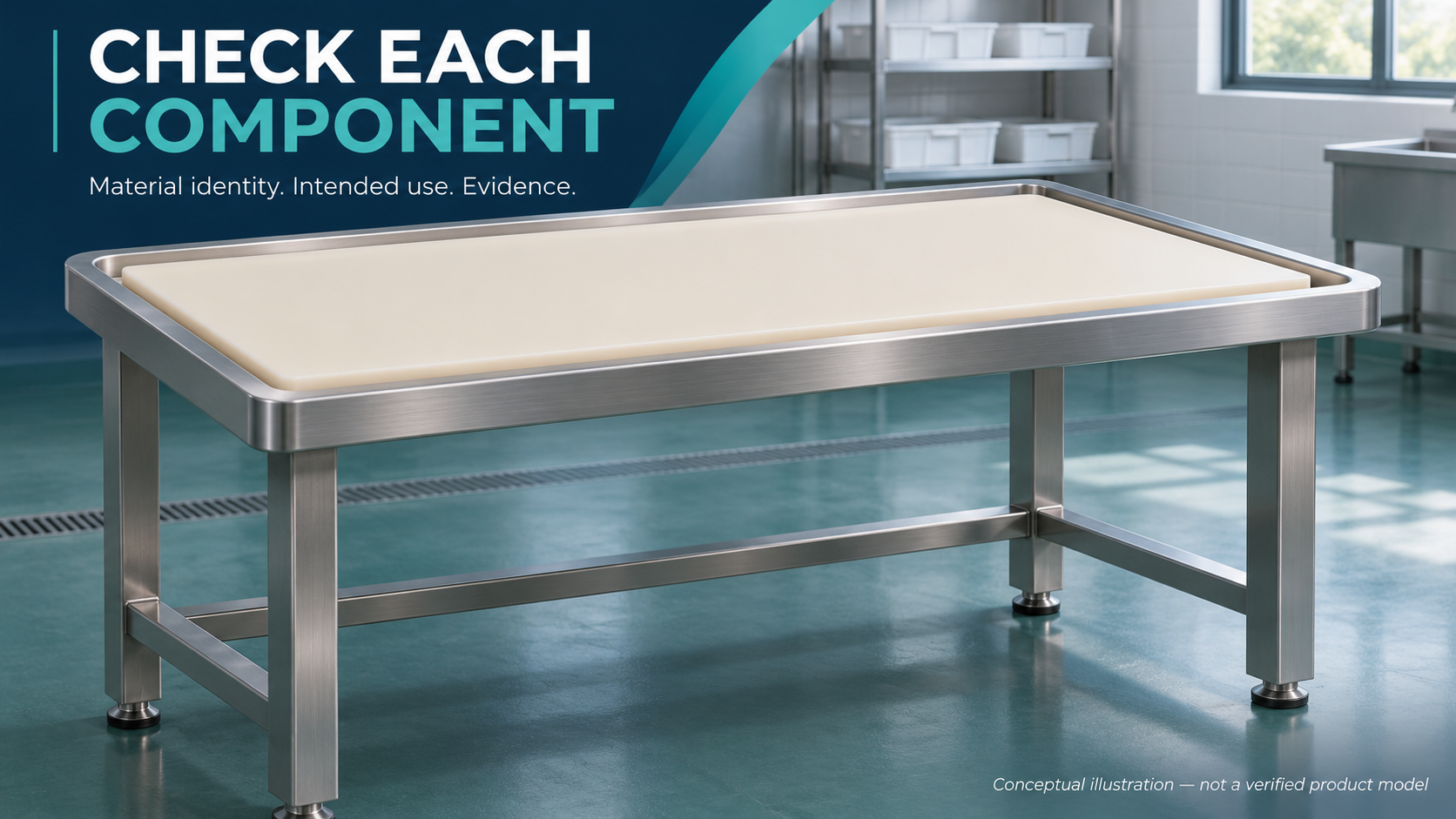
Ask for material evidence at component level before accepting a meat cutting table's specification. A description such as “stainless steel table” may identify the frame without fully identifying the working surface, replaceable inserts, fixings or other parts. Match the documentation to the actual component, its intended contact with food and the proposed conditions of use.
Which components need separate identification?
Use a drawing or component schedule to distinguish the support frame from the working top and any replaceable boards or inserts. Identify other supplied items relevant to the intended contact assessment, including fittings, coatings or seals where present. Do not assume that every possible component is included in a particular table.
FAO's historical equipment guidance discusses cleanability, corrosion resistance and cutting-table surfaces. It provides useful background for asking about construction, but does not establish a universal approval for a material or compliance with current destination-market requirements. FAO equipment guidance
This article uses that background to frame editorial procurement questions. It does not adopt the source's historical material restrictions, numerical recommendations or cleaning methods as current law. Neither the word “stainless” nor “plastic” alone answers whether the offered component is appropriate for its intended application.
What intended use should accompany the material request?
Describe the food or product handled, whether contact is intended or incidental, the relevant operating conditions and the planned cleaning environment. Ask the supplier which additional information is needed to assess its proposed material. Have the plant's responsible quality specialists define the use conditions instead of filling gaps with generic assumptions.
Distinguish the delivered assembly from replacement components. If an insert will later be replaced, ask how its material identity and revision will remain traceable. An apparently similar replacement is not automatically covered by the original documentation.
How should buyers match documents to the delivered parts?
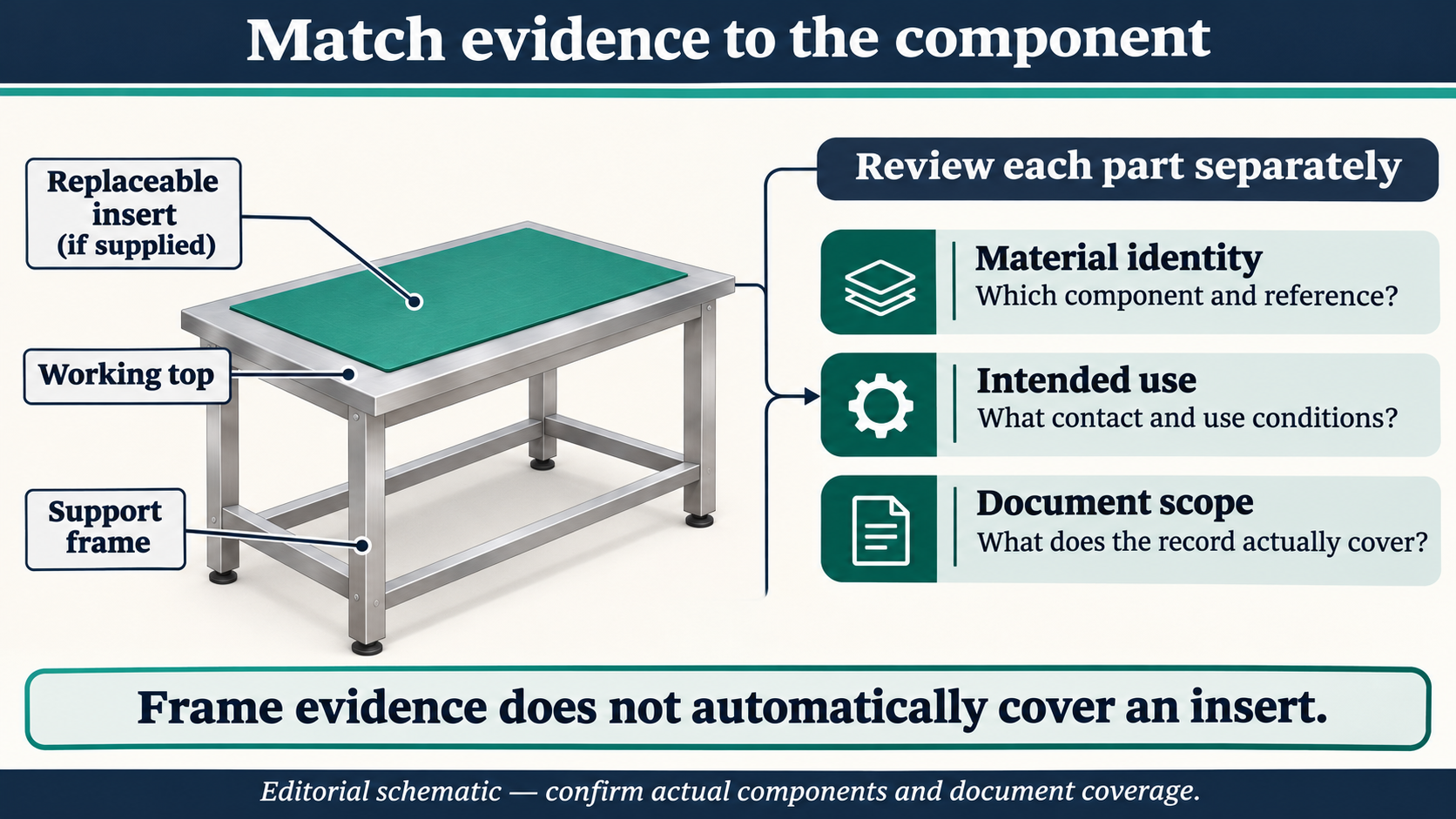
Request a component-to-document schedule rather than one unqualified “food-grade” statement for the entire table.
Review the component-to-document evidence checklist below.
A material record may help identify composition without answering every food-contact question. A test report may cover a particular sample and set of conditions rather than every configuration. Ask the responsible reviewer to identify what each document demonstrates and which questions remain open. This guide does not prescribe a universal certificate or test package.
What should be confirmed before ordering and receiving the table?
Have a qualified compliance reviewer identify the requirements applicable to the intended market and use. Request the supporting documents that review calls for, then agree how unresolved items will be closed. Do not treat a historical reference, supplier brochure or unrelated certificate as a substitute for that assessment.
Record the approved component schedule with the quotation and drawing revision. Ask the supplier to identify proposed material substitutions before acceptance. At receipt, compare the delivered references and accompanying records against the agreed schedule, and refer discrepancies to the responsible team.
The HUATAO supply-role and quality page explains the general need for configuration-specific evidence. This article establishes no HUATAO material grade, food-contact certificate or test result for a particular table. Product-specific suitability remains subject to the actual documents and review.
Buyer's next step: Send one marked component drawing with the enquiry. Ask the supplier to enter the material identity, intended-use information and supporting document reference for each relevant part, leaving unconfirmed entries visibly open.
| Component or evidence item | What to clarify |
|---|---|
| Frame and working surface | Their separate material identities and drawing references |
| Replaceable insert, if supplied | Exact supplied reference, material identity and intended-use information |
| Supporting document | Issuer, date, scope and the component or material it actually covers |
| Test report, where relevant | Tested sample, conditions and limitations, assessed against the intended application |
| Delivered assembly | How purchase, component and supplier records connect the supplied parts to the reviewed documents |
| Review point |
|---|
| Review support frame, working top and replaceable insert separately. |
| Material identity: which component and reference? |
| Intended use: what contact and use conditions? |
| Document scope: what does the record actually cover? |
| Frame evidence does not automatically cover an insert. |
Questions before you decide
Does a certificate for the frame also cover a replaceable cutting insert?
Check its stated scope. Coverage of one component does not establish coverage of another. Obtain documentation linked to the insert actually proposed and have it reviewed against that insert's intended use.