 SlaughterPro | HUATAO

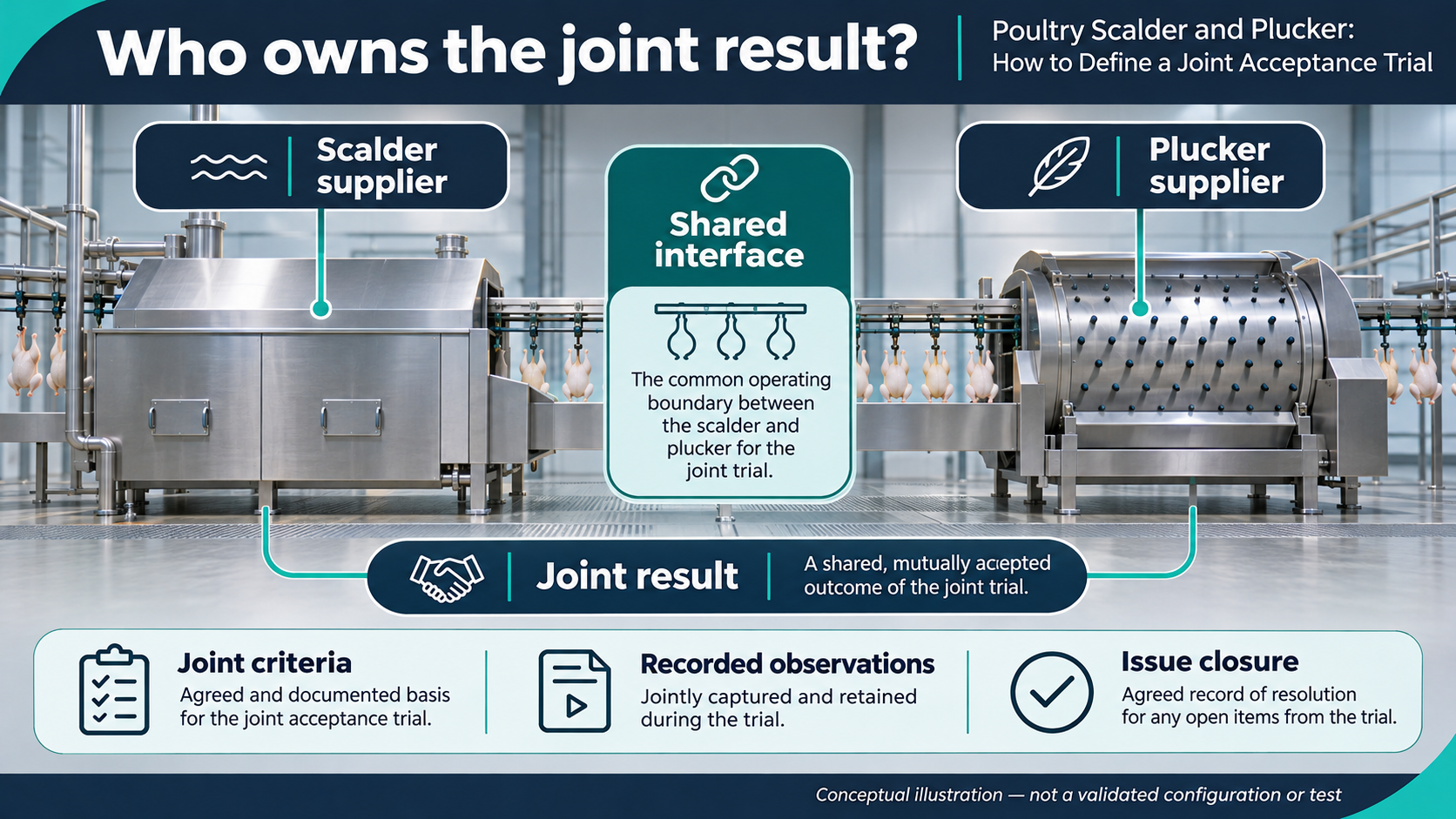
When purchasing or modifying connected scalding and plucking equipment, agree how the combined result will be evaluated and how an unacceptable result will be investigated. Separate machine quotations can leave responsibility unclear at the process interface.
Why review the machines together?
The World Bank Group's poultry-processing guidance describes scalding followed by plucking as connected operations. Its 2007 process overview provides historical background, not an operating prescription or current destination-country rule. Poultry processing guidance, process description
For procurement, identify which supplier is responsible for each machine and who coordinates the joint review. Document the incoming material and the interface between the two machines. A combined acceptance result should not conceal an unresolved division of responsibility.
Which result and evidence should be agreed first?
Have the project specialists define acceptable finished appearance and remaining work, together with how samples and observations will be recorded. Agree which configuration, species and incoming size range the trial represents. Record the sample selection and any exclusions; a demonstration using one bird type does not automatically establish another's suitability. Retain records of unacceptable output as well as acceptable examples, and distinguish observed defects from conclusions about their cause.
Ask how any changed condition during the review will be documented. Without a change record, a successful final sample may not show which equipment combination was actually evaluated. This guide provides no machine adjustments, scalding conditions or fault-diagnosis procedure.
What happens if the combined result fails acceptance?
Before the trial, agree who records the issue, which parties review the evidence and what additional verification will be required. Avoid assigning every problem to the upstream machine or the downstream machine without a technical assessment.
Keep individual equipment documentation and joint acceptance records linked. A successful component inspection and a successful integrated process review answer different purchasing questions.
Buyer's next step: Add a joint-trial responsibility schedule to both purchase scopes, naming the coordinator, required evidence, result criteria and process for closing disputed observations.
| Review item | Record to agree |
|---|---|
| Machine owner | Identify scalder supplier and plucker supplier |
| Shared interface | Document common process boundary and coordinator |
| Joint criteria | Agree and document acceptance basis |
| Recorded observations | Capture and retain observations during trial |
| Issue closure | Record resolution of open items |